
In today’s regulatory environment, organizations are expected to demonstrate compliance through clear and verifiable records. Policies alone are not enough. During audits, regulators and oversight bodies require documented evidence that compliance procedures, training programs, and operational controls are actively implemented.
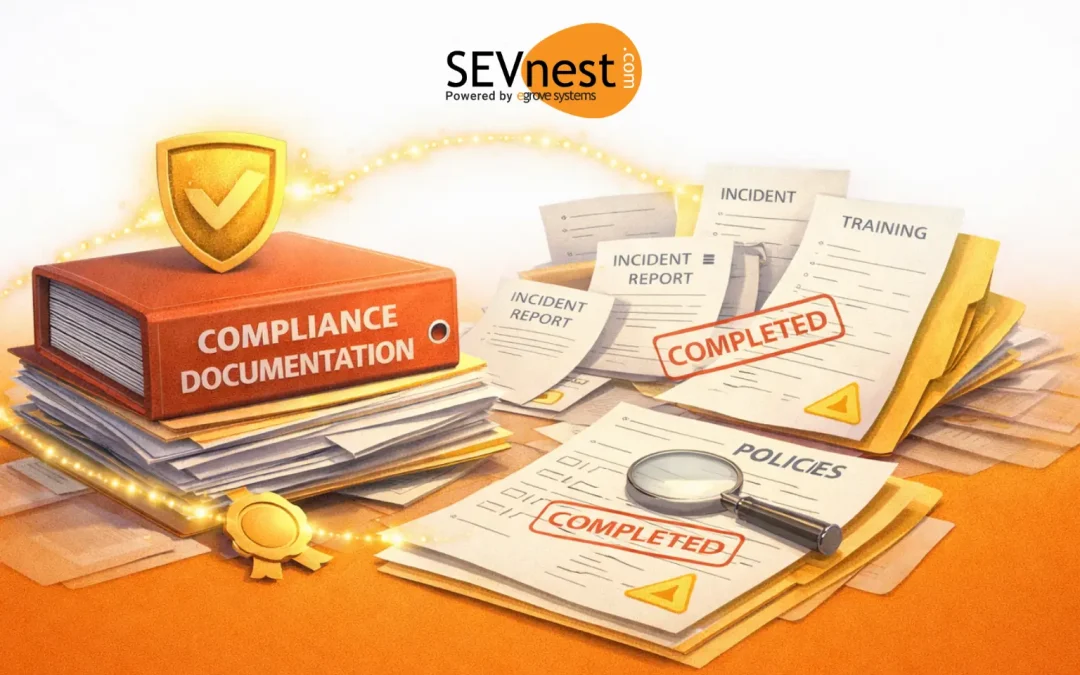
Compliance documentation serves as proof that an organization meets regulatory requirements and maintains responsible governance practices. Without proper records, even well-intentioned organizations may struggle to demonstrate their compliance efforts.
Businesses that prioritize structured documentation reduce the risk of penalties, strengthen audit readiness, and maintain operational transparency.
SEVnest supports organizations by enabling structured compliance training and documentation practices that help reinforce accountability and regulatory confidence.
How Documentation Serves as Evidence in Compliance Audits
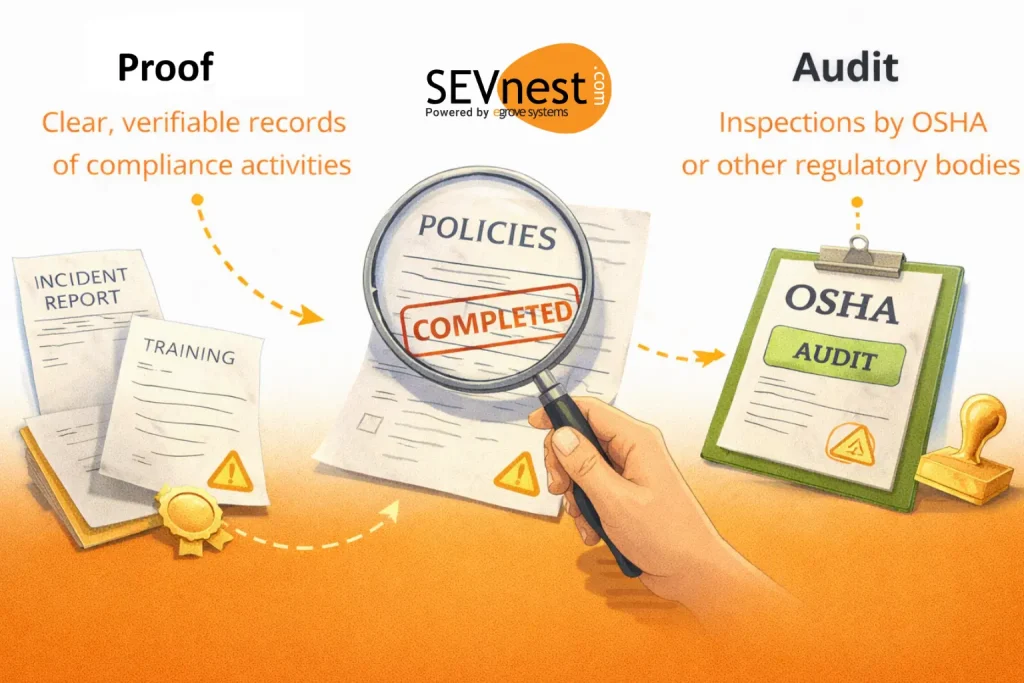
Audits are designed to verify whether organizations follow established regulations and internal compliance policies. Auditors do not rely on verbal explanations or informal assurances. Instead, they examine documented records that demonstrate how compliance measures are implemented.
Common examples of documentation reviewed during audits include:
- Employee training records
- Policy acknowledgment confirmations
- Incident reports and investigation records
- Compliance monitoring logs
- Certification and qualification records
These documents provide verifiable evidence that employees understand regulatory expectations and that organizations are actively managing compliance responsibilities.
Without proper documentation, organizations may face difficulty proving that required processes are consistently followed.
Compliance Documentation Demonstrates Accountability
Documentation plays an essential role in establishing organizational accountability. When compliance procedures are documented, leadership can demonstrate that appropriate measures are in place to manage regulatory obligations.
Well-maintained compliance records help organizations:
- Track employee training completion
- Confirm that safety and compliance policies are communicated
- Monitor adherence to operational standards
- Identify gaps in compliance procedures
- Maintain transparency with regulators and stakeholders
This level of documentation ensures that compliance is not simply theoretical but actively practiced across the organization.
SEVnest supports organizations by helping structure compliance training documentation, ensuring that businesses can demonstrate consistent compliance practices when audits occur.
Reducing Audit Risks Through Organized Records
During regulatory audits, incomplete or disorganized documentation often raises concerns for auditors. Missing records may create the impression that compliance activities were not properly conducted.
Organizations that maintain structured documentation systems benefit in several ways:
- Faster audit preparation
- Reduced regulatory scrutiny
- Improved credibility with auditors
- Clear visibility into compliance activities
- Reduced administrative stress during inspections
Proper documentation allows organizations to respond quickly to audit requests while demonstrating strong governance practices.
Structured compliance documentation ensures that required records are accessible, organized, and easily verifiable.
Supporting Regulatory Compliance Across Departments
Compliance requirements often span multiple departments within an organization. Human resources, safety teams, operational managers, and compliance officers all contribute to maintaining regulatory standards.
Effective documentation helps coordinate these responsibilities by creating a centralized record of compliance activities.
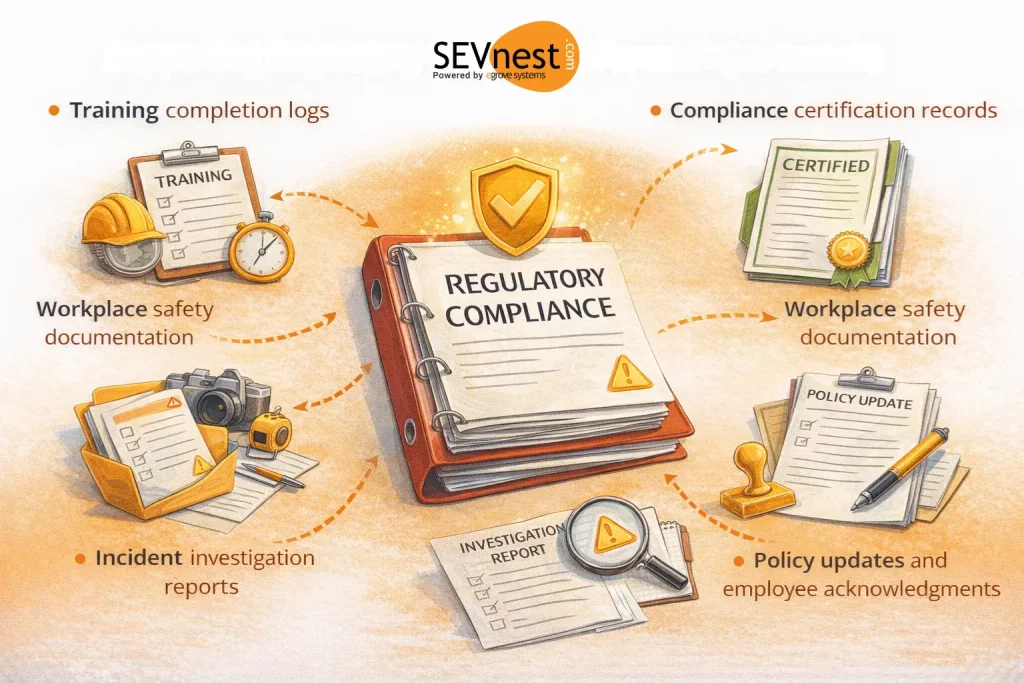
This documentation may include:
- Training completion logs
- Compliance certification records
- Workplace safety documentation
- Incident investigation reports
- Policy updates and employee acknowledgments
By maintaining centralized documentation, organizations ensure consistency across departments and reduce the risk of compliance gaps.
SEVnest supports organizations by enabling structured compliance training management, helping teams maintain consistent records and documentation across departments.
Building Long-Term Organizational Transparency
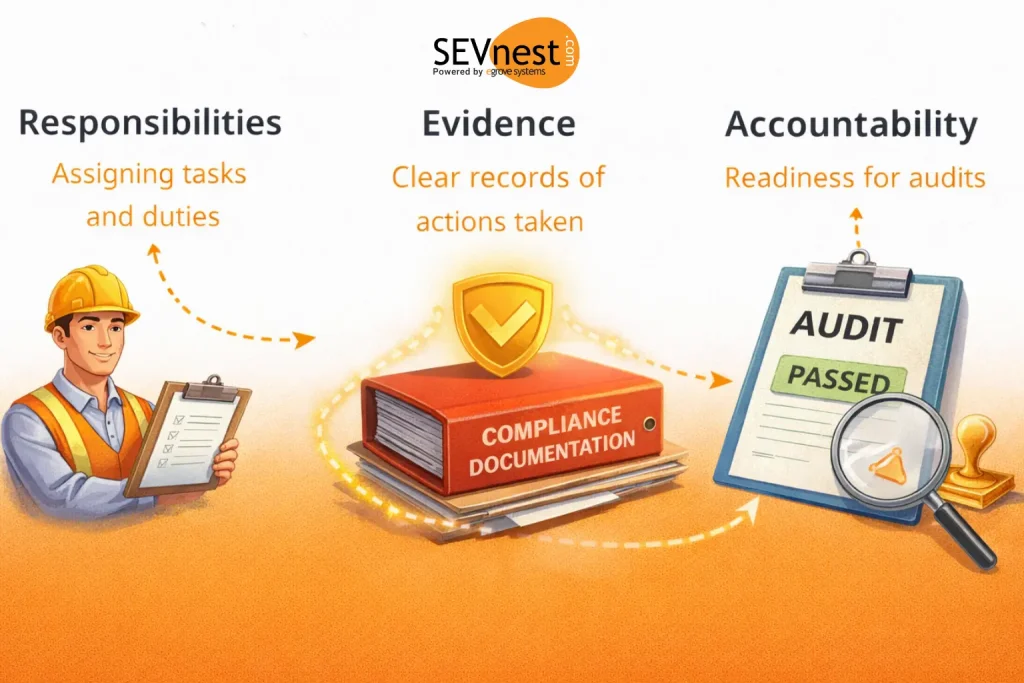
Compliance documentation does more than prepare organizations for audits. It also strengthens internal transparency and operational oversight.
When documentation systems are properly maintained, leadership can monitor compliance performance and identify areas that require improvement.
Organizations benefit from:
- Greater visibility into compliance activities
- Improved internal governance
- Better risk management
- Clear accountability structures
- Stronger trust with regulators and stakeholders
Documentation transforms compliance from a reactive activity into a proactive management process.
Preparing for Audits Before They Occur
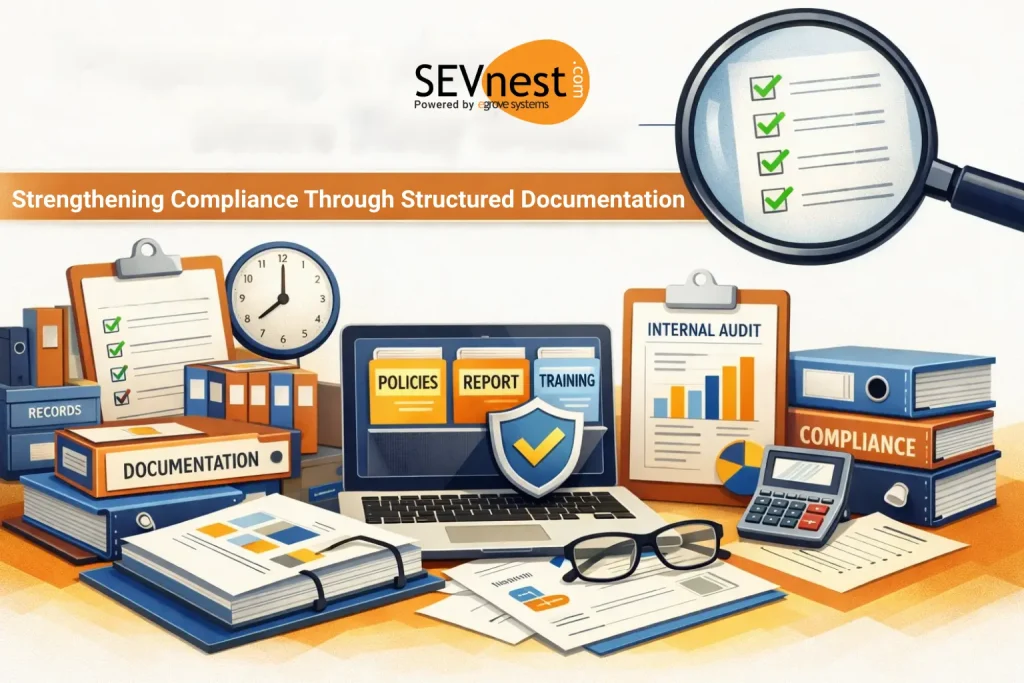
Organizations that treat documentation as an ongoing process are far better prepared when audits take place. Rather than scrambling to gather records, they already maintain organized documentation that demonstrates compliance readiness.
Proactive documentation practices include:
- Recording training completion regularly
- Maintaining policy acknowledgment logs
- Documenting incident investigations
- Tracking compliance certifications
- Updating records as regulations evolve
These practices ensure that compliance documentation remains current and reliable.
SEVnest helps organizations maintain structured documentation processes that support continuous compliance readiness and simplify audit preparation.
Strengthening Compliance Through Structured Documentation
Regulatory expectations continue to evolve, and organizations must demonstrate that compliance procedures are consistently implemented. Documentation provides the evidence necessary to validate these efforts.
By maintaining clear and organized compliance records, organizations protect themselves during audits while strengthening operational accountability.
Compliance documentation not only supports regulatory requirements but also promotes transparency, risk awareness, and responsible governance practices.
SEVnest supports organizations in building structured compliance training and documentation systems that reinforce audit readiness and long-term compliance confidence.