


In today’s evolving regulatory landscape, compliance risk often begins earlier than organizations expect, during employee onboarding. The first few days and weeks of employment set the foundation for how well employees understand policies, procedures, and regulatory responsibilities.
Onboarding has evolved beyond a routine HR activity and now plays a critical role in ensuring compliance across the organization. Without structured onboarding, employees may lack clarity on policies, safety standards, and legal obligations, which increases the risk of non-compliance from the very start.
Organizations that invest in effective onboarding reduce compliance gaps, improve accountability, and create a workforce that is aligned with regulatory expectations from day one.
SEVnest supports organizations by enabling structured onboarding and compliance training processes that help reduce risk and strengthen regulatory readiness.
First Impressions That Define Compliance Behavior
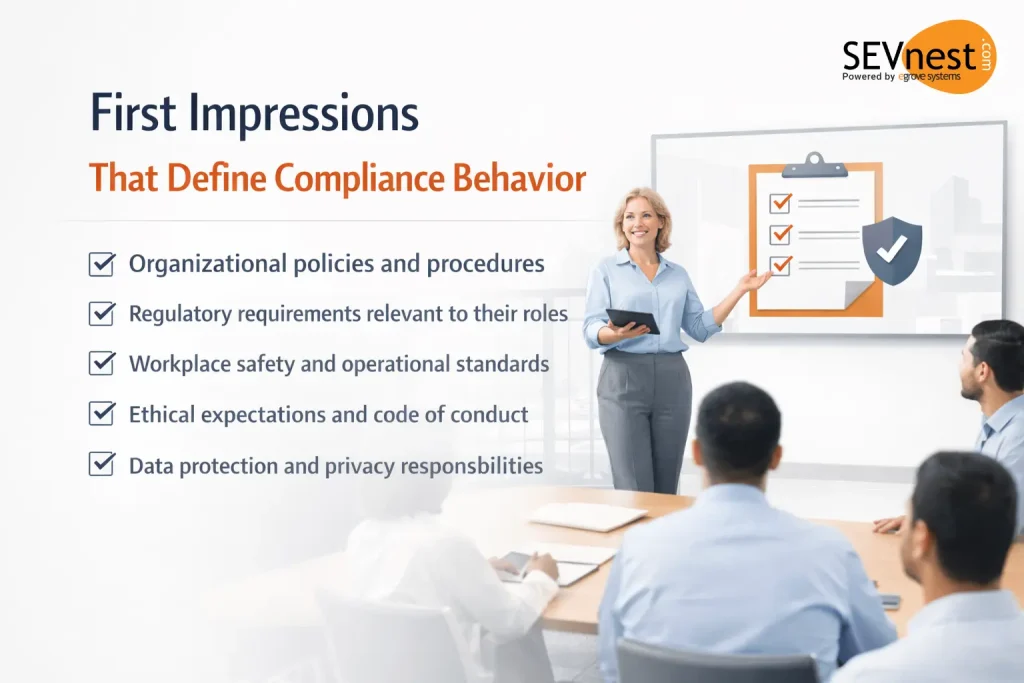
Employee onboarding is the first opportunity to establish how seriously compliance is treated within an organization. It sets expectations, communicates standards, and introduces employees to the rules that govern their roles.
A well-designed onboarding experience ensures that employees clearly understand:
- Organizational policies and procedures
- Regulatory requirements relevant to their roles
- Workplace safety and operational standards
- Ethical expectations and code of conduct
- Data protection and privacy responsibilities
When employees receive this clarity early, they are more confident in making compliant decisions, reducing the chances of avoidable mistakes.
Where Most Compliance Risks Quietly Begin
Many compliance failures do not occur due to negligence but because of unclear or incomplete onboarding. When employees are not properly guided, small gaps can quickly turn into significant risks.
Common early-stage risks include:
- Lack of awareness of key policies
- Incomplete or missed training sessions
- Misinterpretation of procedures
- Inconsistent practices across teams
- Increased exposure to regulatory penalties
Addressing these risks at the onboarding stage prevents issues before they escalate into compliance violations.
SEVnest helps organizations eliminate these gaps by ensuring onboarding processes are structured, trackable, and consistent across all employees.
Turning Consistency into a Compliance Advantage
Inconsistent onboarding leads to inconsistent compliance. When different teams follow different onboarding approaches, it creates confusion and increases the likelihood of regulatory issues.
Standardized onboarding ensures that:
- Every employee receives the same level of compliance training
- Policies are communicated in a uniform manner
- Training completion is monitored and verified
- Regulatory updates are consistently integrated
This consistency creates a strong compliance foundation across the organization, reducing variability and strengthening control.
From Training to Proof: Making Compliance Measurable
Compliance is not only about delivering training but also about proving that it has been completed. During audits, organizations must demonstrate that employees were properly onboarded and trained.
Effective onboarding creates measurable and verifiable records such as:
- Training completion logs
- Policy acknowledgment records
- Certification and qualification tracking
- Assessment and evaluation results
These records serve as proof that compliance requirements are being actively implemented.
Without proper documentation, organizations may struggle to validate their compliance efforts during audits.
SEVnest enables organizations to maintain structured onboarding records, ensuring audit-ready documentation at all times.
Building Responsibility from the Start
Onboarding plays a critical role in shaping employee behavior and accountability. When expectations are clearly defined from the beginning, employees are more likely to take ownership of compliance responsibilities.
Structured onboarding helps organizations:
- Clearly define roles and responsibilities
- Reinforce expected behaviors
- Promote ethical decision-making
- Reduce policy violations
- Encourage adherence to standards
This early alignment ensures that compliance becomes part of everyday operations rather than a reactive measure.
Always Audit-Ready, Not Audit-Stressed
Organizations often struggle during audits when onboarding processes are not properly documented or tracked. Missing records and inconsistent training data can raise concerns for auditors.
Effective onboarding ensures that organizations can:
- Quickly access training and compliance records
- Demonstrate policy communication
- Show evidence of employee awareness
- Reduce time spent preparing for audits
- Build credibility with regulators
By embedding compliance into onboarding, organizations remain prepared at all times rather than reacting under pressure.
SEVnest supports continuous audit readiness by organizing onboarding data and compliance records in a structured and accessible manner.
Connecting Onboarding with Long-Term Compliance

Onboarding should not function in isolation. It must connect with ongoing compliance initiatives to ensure sustained adherence to regulations.
An integrated approach allows organizations to:
- Extend onboarding into continuous learning programs
- Keep employees updated with regulatory changes
- Monitor compliance performance over time
- Identify and address knowledge gaps early
- Reinforce compliance through regular training
This connection ensures that compliance is maintained beyond the initial onboarding phase.
Shaping a Culture Where Compliance Comes Naturally
Organizations that treat onboarding as a strategic compliance tool create a culture where employees naturally follow policies and procedures.
A compliance-driven onboarding approach leads to:
- Higher awareness across teams
- Reduced operational and regulatory risks
- Stronger governance practices
- Better alignment with legal requirements
- Increased trust from stakeholders
When compliance is embedded into onboarding, it becomes a shared responsibility across the organization.
Turning Onboarding into a Risk Reduction Strategy
Compliance risks often originate from gaps in communication, training, and documentation, many of which occur during onboarding.
By strengthening onboarding processes, organizations can:
- Minimize compliance violations
- Improve training effectiveness
- Maintain accurate and accessible records
- Enhance audit readiness
- Build a culture of accountability
Onboarding should be viewed as a core part of an organization’s risk management strategy, not just an administrative function. When structured correctly, it directly influences how well employees understand and follow regulatory requirements.
SEVnest supports organizations in building structured onboarding and compliance training systems that reduce risk, improve audit readiness, and ensure long-term compliance confidence.