

Creating fresh content for every marketing platform is time-consuming. Businesses often spend hours writing website blogs, preparing email newsletters, and developing social media posts, even though the core message behind all of them is usually the same.
A smarter approach is Create Once, Publish Everywhere.
This content repurposing strategy helps businesses turn one well-written blog into multiple marketing assets for websites, email campaigns, and social platforms. It saves time, keeps messaging consistent, and helps valuable content reach a wider audience.
What Does “Create Once, Publish Everywhere” Mean?
Create Once, Publish Everywhere is an Omnichannel Content Marketing approach built around one comprehensive piece of content that is then adapted for different digital channels. This strategy helps businesses maintain consistent brand messaging while reaching audiences across multiple platforms.
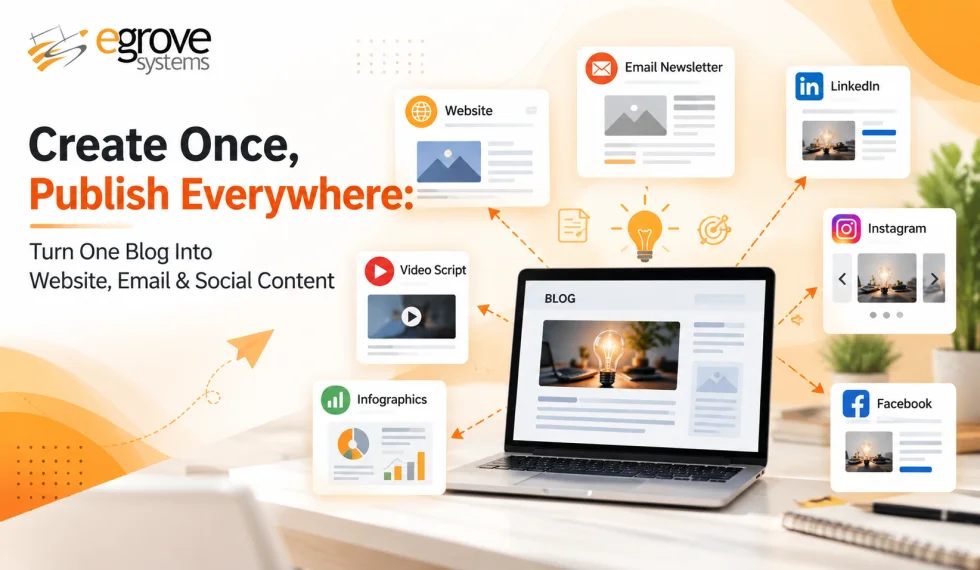
For example, a business publishing a blog about improving customer engagement can reuse the same information to create:
- A detailed article for its website
- An informative email newsletter
- Short LinkedIn updates
- Instagram carousel content
- Facebook posts
- Short video scripts
- Educational infographics
Each version carries the same core message but is adjusted to the audience and format of the platform. The goal is not to copy and paste content everywhere. Instead, omnichannel content marketing makes useful information accessible in different formats, helping businesses expand their reach, improve audience engagement, and maximize the value of existing content without starting from zero each time.
Why Content Repurposing Matters for Businesses
Digital marketing demands a consistent online presence, and producing original content for every channel puts real pressure on marketing teams. Blog content repurposing helps businesses get more from the resources they already have while maintaining consistent messaging across digital platforms.
1. Saves Time and Effort
Writing one detailed blog and adapting it into smaller pieces is usually faster than developing separate ideas for each channel. Teams can spend more time on content quality, campaign planning, and audience engagement.
2. Maintains Consistent Brand Messaging
When your website, newsletters, and social posts communicate the same key information, audiences hear one clear message. That consistency reinforces your expertise and makes your brand easier to recognize.
3. Reaches Different Audience Groups
Not every potential customer reads website blogs. Some prefer LinkedIn updates, others engage with Instagram posts, and many rely on email for business information. An effective Multi-channel content distribution approach lets you meet people where they already are.
4. Supports Discovery and Website Traffic
A well-optimized blog can attract visitors through organic search. Sharing related content through email and social media creates more opportunities to bring interested readers back to your site. Repurposing does not automatically improve search rankings, but it can broaden how your content is discovered.
5. Extends the Life of Your Content
A useful blog keeps its value long after publication. Revisiting it in fresh formats keeps it relevant and reduces unnecessary duplication of effort.
Content repurposing is the practice of reshaping one core piece of content into multiple formats, each tailored to a specific channel and audience, while keeping the central message consistent.
How to Turn One Blog Into Multiple Marketing Assets
A successful repurposing strategy starts with a clear, informative blog that addresses a specific audience need. Here is how to turn one article into a coordinated campaign.
Step 1: Create a High-Quality Website Blog
The original blog is the foundation for every other format. Choose a topic that reflects your audience’s interests, challenges, or frequently asked questions.
Example blog topic: “5 Ways Businesses Can Improve Customer Engagement”
The article could cover customer communication, personalized experiences, feedback collection, digital tools, and retention. Use clear headings, practical explanations, relevant keywords, and actionable recommendations. Short, direct answers under each heading also make the content easier for readers, search engines, and AI-driven search experiences to understand and surface. [Add internal link: related eGrove blog or service page]
The stronger the original content, the easier it is to create meaningful variations.
Step 2: Convert the Blog Into an Email Newsletter
An email should deliver the blog’s most valuable insights without reproducing the whole article. Open with a relevant subject line, introduce the problem, and highlight two or three key takeaways.
Example subject line: “Want Better Customer Engagement? Start With These 5 Ideas”
Briefly explain why the topic matters, then add one clear call to action such as “Read the Full Blog” to send subscribers to your website.
Step 3: Create LinkedIn Content
LinkedIn suits professional insights and business-focused recommendations. Turn one important idea from the blog into a concise post.
For example: “Strong customer engagement starts with understanding what customers need. Personalized communication, timely support, and consistent follow-ups help businesses build better relationships.”
End with a discussion question or an invitation to read the full article. The post should be valuable on its own, not just a promotional link.
Step 4: Develop Instagram and Facebook Posts
Visual platforms reward short, clearly organized messages. A blog with five recommendations can become a six-slide Instagram carousel.
Example carousel structure:
- Slide 1: 5 Ways to Improve Customer Engagement
- Slide 2: Personalize Customer Communication
- Slide 3: Respond Quickly to Customer Questions
- Slide 4: Collect and Act on Feedback
- Slide 5: Build Meaningful Customer Relationships
- Slide 6: Discover More Tips on Our Website
The same content can be adapted into Facebook posts, short captions, or educational graphics. Keep each message easy to understand and suited to the platform’s visual format.
Step 5: Turn Blog Insights Into Short Videos
A single blog section can become a 30-60 second educational video, such as three common customer engagement mistakes and how to avoid them. Share it through Instagram Reels, YouTube Shorts, or LinkedIn, and use clear explanations, readable captions, and a relevant call to action.
One Blog, Multiple Content Formats
This table shows how one blog can extend across channels.
| Marketing Channel | Repurposed Content | Primary Goal |
| Website | Complete SEO-friendly blog | Organic visibility and education |
| Newsletter with key insights | Subscriber engagement | |
| Professional tips and insights | Business audience engagement | |
| Educational carousel | Visual engagement | |
| Short informative post | Audience reach | |
| YouTube Shorts | Quick educational video | Video discovery |
| Infographic | Visual summary of key points | Easy information sharing |
Best Practices for Effective Content Repurposing
-
Understand the platform. A LinkedIn post needs a different tone and structure than an Instagram carousel or a promotional email.
-
Preserve the original message. Core information should stay accurate across every format.
-
Avoid duplication. Adapt the language, presentation, and level of detail instead of publishing identical content everywhere.
-
Use platform-specific calls to action. Invite newsletter readers to visit your site, LinkedIn audiences to share opinions, and social followers to explore more.
-
Review before publishing. Check every repurposed asset for readability, accuracy, grammar, and relevance.
-
Space out distribution. Staggering posts over a few weeks keeps the topic visible without feeling repetitive.
How AI Can Support Content Repurposing
AI-assisted tools can make repurposing more efficient by helping teams organize information and prepare first drafts. They can support tasks such as:
- Summarizing long blog articles
- Suggesting email subject lines
- Creating platform-specific social captions
- Identifying key points for carousel posts
- Developing short video scripts
- Generating alternative headlines and calls to action
- Organizing publishing schedules
AI-generated content still needs human review. Teams should verify facts, refine the tone, and make sure each piece accurately represents the business. Pairing AI-assisted workflows with editorial oversight keeps production manageable without compromising quality.
Measure the Success of Your Content Strategy
Publishing across channels is only half the work. You also need to know whether your content is reaching and engaging the right people. An effective content distribution strategy helps businesses measure performance across different platforms and identify opportunities for improvement.
Useful indicators include website visits, organic search impressions, newsletter open and click rates, social engagement, referral traffic, and lead conversions.
For example, if a LinkedIn post drives plenty of traffic but few inquiries, the landing page or call to action may need work.
Regular analysis shows which formats perform best, helps refine your content distribution strategy, and shapes your next publishing plan.
How eGrove Systems Can Support Your Content Strategy
Repurposing works best when your website, content, and digital tools support each other. eGrove Systems helps businesses build that foundation, from high-performing websites and ecommerce experiences to search visibility and content strategy, so your content is structured for discovery and ready to be adapted across channels. [Add internal link: eGrove services page]
Conclusion
Businesses do not always need more content ideas. Sometimes they need a better way to use the valuable content they already have. A single high-quality blog can become the foundation for newsletters, LinkedIn posts, Instagram carousels, Facebook updates, and short videos. With the right planning, platform-specific adaptation, and performance tracking, one content idea can become a coordinated digital marketing campaign.
Create once. Adapt intelligently. Publish everywhere.
eGrove Systems helps businesses turn strong content into measurable digital growth. Connect with eGrove Systems to build a content and digital strategy that scales with your business.