
Completing an online course is an important milestone, but does it guarantee that learners can remember and apply what they have learned?
Traditional Learning Management Systems (LMS) focus on enrollment, content delivery, assessments, and completion tracking. These functions are essential, yet learning does not end when a certificate is issued. Learners may need guidance, reinforcement, and practical support long after training is over.
This is where AI learning assistants in LMS platforms can make a meaningful difference. By offering personalized recommendations, answering questions, identifying knowledge gaps, and supporting ongoing skill development, they can turn an LMS from a course management system into a continuous learning environment. For educational institutions, corporate training teams, and professional development providers, this opens the door to stronger engagement, better knowledge retention, and longer-term learning outcomes.
What Are AI Learning Assistants in LMS Platforms?
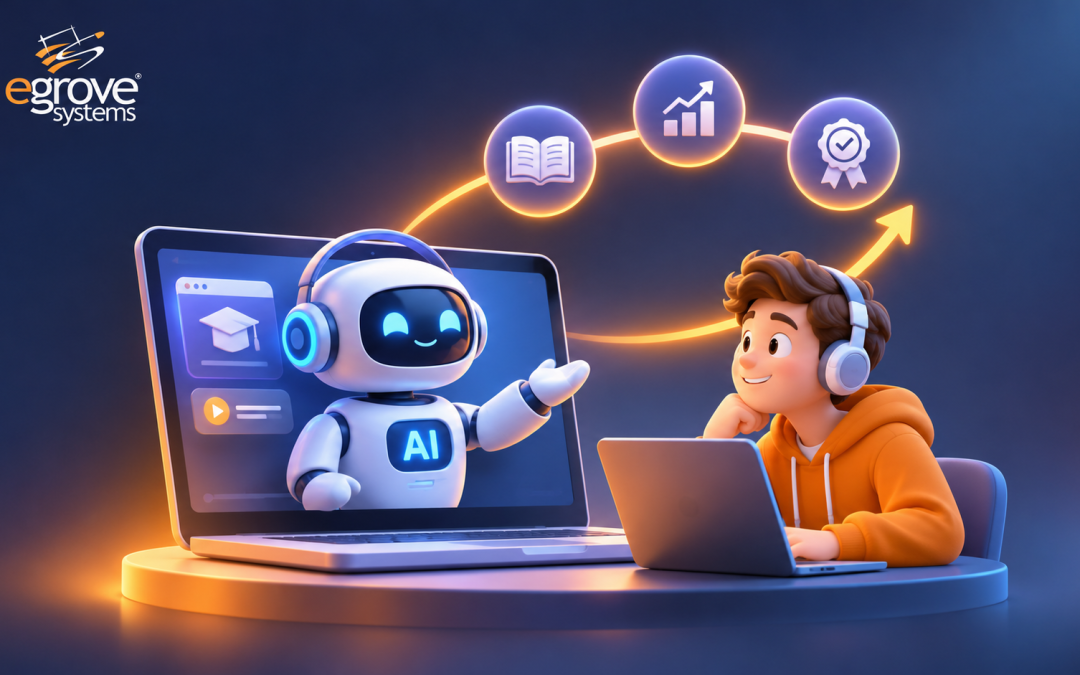
AI learning assistants are intelligent software tools integrated into a Learning Management System to provide automated, contextual, and personalized learning support.
Unlike traditional LMS features that mainly organize and deliver learning materials, AI assistants can interact with learners, respond to questions, recommend resources, and guide them through learning activities based on course information and learner progress. They may draw on technologies such as artificial intelligence, natural language processing (NLP), machine learning, and generative AI.
For example, a learner who completed a cybersecurity awareness course may later need clarification about spotting phishing emails. Instead of searching through the entire course, the learner can ask an AI assistant for an explanation or a link to refresher material.
Key capabilities of AI learning assistants
- Personalized learning recommendations based on learner needs and progress
- Conversational support for course-related questions
- Knowledge reinforcement through quizzes and practice activities
- Learning gap identification using assessment results
- Relevant content recommendations for continuous skill development
- Automated reminders for refresher training and learning milestones
- Learning support that remains available beyond course completion
These capabilities allow an LMS to support learners throughout their journey rather than only up to course completion. AI Learning Assistants in LMS environments can extend this support by making relevant learning resources available when learners need them.
Why Course Completion Alone Is Not Enough
Traditional LMS platforms usually measure success through completion rates, assessment scores, attendance, and certification status. These metrics are useful, but they do not always show whether learners can apply what they know in practical situations.
Consider an employee who completes workplace compliance training and passes the final assessment. Several months later, that employee may struggle to recall a particular procedure. Similarly, a student who finishes an online programming course may still need guidance when applying the concepts to a real project.
Definition: Continuous learning. Course completion shows that a learner has finished the required activities. Continuous learning is the ongoing process of maintaining, improving, and applying knowledge over time.
AI learning assistants can help bridge this gap by providing ongoing assistance, recommending relevant materials, and encouraging learners to revisit important concepts. An AI-Powered Learning Management System can support this ongoing process by connecting learners with relevant guidance and refresher activities.
How AI Learning Assistants Support Learners Beyond Course Completion
1. Personalized Learning Recommendations
AI learning assistants can analyze completed courses, assessment performance, and learning preferences to recommend relevant resources. After completing a digital marketing course, for example, a learner may receive recommendations for advanced SEO, analytics, or marketing automation training.
2. On-Demand Learning Assistance
Learners often have questions after a course ends. An AI learning assistant can provide explanations, retrieve relevant course resources, and point learners to additional information without requiring them to restart an entire module.
3. Knowledge Retention and Reinforcement
Knowledge can fade when learners do not revisit or apply it. AI assistants can recommend short quizzes, refresher lessons, practice exercises, and spaced-review activities to reinforce what was previously learned.
4. Identifying and Addressing Learning Gaps
AI-powered LMS platforms can use assessment results, learner interactions, and performance trends to identify where additional support may help. If an employee consistently struggles with data security questions, for instance, the system can recommend resources focused on those topics.
This targeted approach lets learners concentrate on areas that need improvement rather than repeating content they already understand.
5. Supporting Real-World Knowledge Application
Learning becomes more valuable when people can apply it in practical situations. AI learning assistants can support this through scenario-based questions, simulations, guided exercises, and relevant examples. An employee who completed customer service training could practice responding to difficult customer situations, and a healthcare professional could access approved refresher resources on established workplace procedures.
For regulated or high-stakes subjects, AI-generated guidance should be grounded in verified materials and should not replace qualified professional judgment.
6. Encouraging Continuous Skill Development
Professional skills and industry requirements keep evolving, so learners need opportunities to update their knowledge after initial training. AI learning assistants can recommend advanced courses, identify relevant learning pathways, and notify users when updated training materials become available. This helps organizations build a culture of continuous learning and professional development.
7. Improving Learner Engagement
Learners can lose motivation after finishing a course, especially when there is no structured follow-up. AI-powered assistants can encourage continued participation through personalized learning goals, progress reminders, recommended activities, and interactive knowledge checks. When implemented thoughtfully, these features help learners stay connected to the LMS and keep developing their skills.
Traditional LMS vs. AI-Powered LMS With Learning Assistants
| Learning Capability | Traditional LMS | AI-Powered LMS |
| Learning content | Predefined courses | Personalized content recommendations |
| Learner support | FAQs and instructor assistance | AI-assisted, on-demand guidance |
| Learning pathways | Primarily fixed | Potentially adaptive |
| Assessments | Scheduled quizzes and tests | Adaptive practice and targeted reinforcement |
| Post-course support | Often limited | Ongoing learning assistance |
| Knowledge gaps | Manual review | AI-supported analysis |
| Skill development | Course-based | Continuous learning recommendations |
An AI-powered LMS does not automatically provide all of these capabilities. What is available depends on the platform, its integrations, the quality of its learning data, and how its AI tools are configured.
Choosing the right learning platform is an important step before introducing AI-powered capabilities. Organizations need to understand how learning management systems differ from broader e-learning platforms and which features align with their training objectives. Exploring the differences between LMS and e-learning platforms can help businesses make informed decisions about their digital learning infrastructure.
Benefits of Integrating AI Learning Assistants Into LMS Platforms
Improved Learning Experience
AI learning assistants make learning more accessible by helping users find information, understand difficult concepts, and receive support tailored to their needs. Instead of navigating multiple courses or extensive documentation, learners can reach relevant explanations more efficiently.
AI-Powered Learning Assistants can further support this process by providing contextual guidance that helps learners continue developing their knowledge beyond scheduled training sessions.
Better Knowledge Retention
Regular reinforcement and personalized practice help learners revisit important concepts. AI assistants make these activities easier to deliver by recommending exercises based on previous assessments and learning progress.
Reduced Administrative Workload
Training administrators and instructors often spend time answering repetitive questions, recommending resources, and monitoring progress. AI assistants can automate selected routine tasks, freeing educators and training professionals to focus on mentoring, instructional quality, and more complex learner needs.
More Relevant Learning Pathways
Every learner has different skills, goals, and knowledge gaps. AI-powered recommendations help organizations deliver experiences aligned with individual development goals rather than relying entirely on standardized training sequences.
This approach can create a Personalized Learning Experience that responds to individual progress and supports more relevant skill-development opportunities.
Continuous Workforce Development
For businesses, training should support ongoing performance improvement rather than simply satisfy completion requirements. AI learning assistants can connect completed training with refresher activities, updated materials, and future skill-development opportunities.
AI-powered learning platforms are also changing how organizations approach employee training and long-term skill development. Beyond tracking course completion, these systems can help identify skill gaps, recommend relevant training, and support ongoing upskilling. Understanding how AI-powered learning management systems are transforming workforce training can help businesses explore more effective approaches to employee development.
Real-World Applications of AI Learning Assistants
Corporate training and employee development. Organizations can use AI learning assistants to reinforce onboarding information, recommend role-specific training, and support employees as their responsibilities change.
Higher education and online learning. Institutions can provide additional explanations, revision exercises, and personalized study recommendations to help students strengthen their understanding after completing individual modules.
Compliance and professional training. AI assistants can recommend refresher training, direct learners to approved policy documents, and help employees locate relevant compliance resources. Human oversight remains essential for interpreting regulatory requirements.
How AI Learning Assistants Work Within an LMS
AI learning assistants typically combine learning data, AI models, content retrieval, and LMS integrations. A simplified workflow looks like this:
- Learner completes a course. Course progress and assessment results become available.
- AI analyzes available learning data. It identifies potential knowledge gaps and learning needs.
- AI assistant provides support. It answers questions and recommends learning activities.
- Learner continues skill development. Progress is reviewed and recommendations are refined.
This cycle extends the learning experience beyond a single course. Actual implementations vary with the LMS architecture and the data available.
Key Considerations When Implementing AI Learning Assistants
AI learning assistants offer real opportunities, but successful implementation takes careful planning.
- Data privacy and security. LMS platforms hold personal information, assessment results, and learning records. Organizations should apply appropriate access controls, data protection measures, and privacy policies.
- Accuracy of AI-generated responses. AI answers can be incomplete or incorrect. Verified learning materials, retrieval-based systems, and human review help improve reliability.
- Integration with existing LMS platforms. Assistants should work with the organization’s existing learning content, user management systems, reporting tools, and training workflows.
- Accessibility and inclusive learning. AI-powered features should be designed so learners with different abilities can use them effectively.
- Human oversight. Assistants should complement educators, instructors, and training administrators rather than replace essential human guidance.
- Measuring learning outcomes. Organizations should evaluate whether AI assistance improves knowledge retention, learner satisfaction, skill application, and training effectiveness.
These steps help organizations introduce AI responsibly while maintaining trust and learning quality.
The Future of AI Learning Assistants in LMS Platforms
The future of the LMS is likely to bring greater personalization, contextual assistance, and closer integration between learning and everyday work. As AI technologies develop, learning assistants may become better at understanding individual goals, recommending practice activities, and helping people find information when they need it.
Several developments could shape the next generation of AI-powered LMS platforms:
- Context-aware learning. Assistants that recommend resources based on a learner’s role, previous training, and current objectives.
- Adaptive learning experiences. Activities that adjust according to assessment performance and demonstrated knowledge.
- Conversational learning. Natural-language interfaces that make it easier to ask questions and explore course materials.
- Skills-based learning pathways. Recommendations aligned with specific competencies and professional development goals.
- Learning analytics. More detailed insight into engagement, knowledge gaps, and opportunities for improvement.
The effectiveness of these technologies will still depend on instructional design, trustworthy content, data quality, and responsible implementation.
How eGrove Systems Can Support AI-Powered LMS Development
Organizations planning to modernize their learning environments often need more than a traditional course management platform. eGrove Systems develops custom LMS solutions and Moodle integrations, along with learning content development and scalable platforms built around an organization’s learners and training goals.
Depending on project scope, AI-enabled LMS development may include personalized learning workflows, intelligent assistance, learner analytics, integration with existing systems, and scalable learning architectures. eGrove’s AI and machine learning services can support the intelligent layer. Whether an organization is building a new LMS or enhancing an existing one, a well-planned technology approach can create a more engaging and adaptable learning experience.
For K-12 learners, eGrove’s Class2Learn platform offers AI-powered tutoring and test preparation.
The growing use of AI in Learning Management Systems also highlights the importance of connecting intelligent learning features with reliable LMS infrastructure and well-designed educational content.
Conclusion
AI learning assistants are helping redefine how organizations approach online education and training. Rather than treating course completion as the final objective, they provide ongoing support through personalized recommendations, knowledge reinforcement, interactive assistance, and continuous skill development.
The real value of an AI-powered LMS lies not in helping learners finish training, but in supporting their ability to retain knowledge, develop skills, and apply what they have learned. Combining sound instructional design with responsible AI integration lets organizations move beyond completion-focused training toward a more continuous, learner-centered approach.
eGrove Systems helps organizations turn that approach into working digital learning platforms. Looking to build an intelligent learning platform that supports learners beyond course completion? Explore eGrove Systems’ custom eLearning and LMS development solutions.