
Artificial intelligence has grown into an invisible force, guiding the way people explore, shop, and connect with brands online. From recommendations of products to conversational shopping, AI has changed the digital retail space. E-commerce has now moved from the recommendation algorithms to intelligent and autonomous systems. Modern e-commerce experience is beginning to evolve from algorithmic recommendations to intelligent ones. Capable of anticipating user moves and behaviors, AI adoption in retail is growing, with its rising intelligent abilities enhancing brand performance and profits.
E-commerce Market Overview
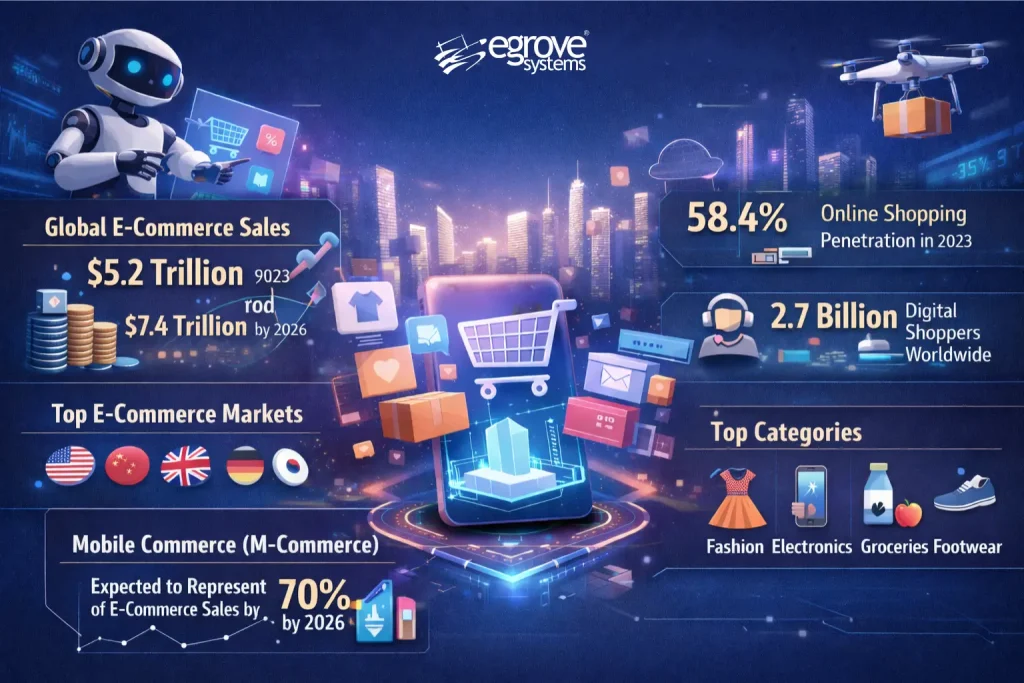
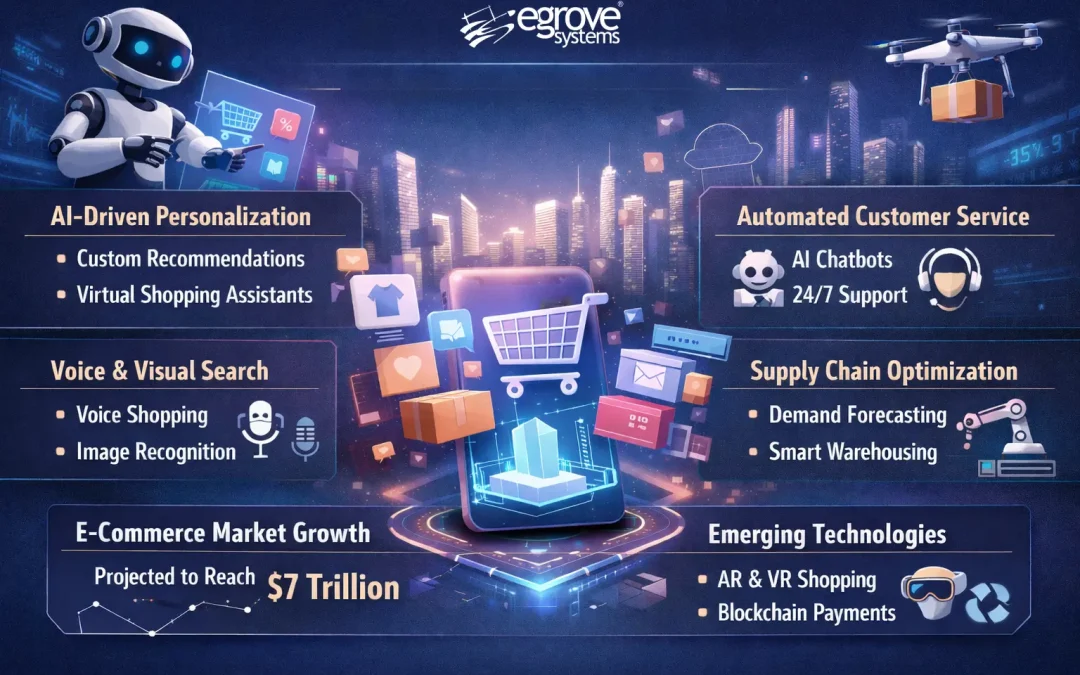
The global e-commerce AI market is expected to exceed USD 45 billion by 2026. This growth is driven by automation, predictive analytics, and hyper-personalized experiences. Retailers will begin to see AI as not a feature, but as core infrastructure to allow for agility, data-driven decision-making, and scale.
AI currently impacts every step of the customer lifecycle: from product discovery to delivery logistics. Recommendation engines, visual search, and generative AI to create content are starting to become the baseline expectation of any competitive online retailer, as opposed to a premium add-on.
E-commerce AI Trends
AI is shaping the future of e-commerce’s future and a lot of trends are expected to come out ahead. Some of the key trends which are currently developing the future of digital retail and some expected ones to take a bigger role include the following:
Predictive Shopping Experiences
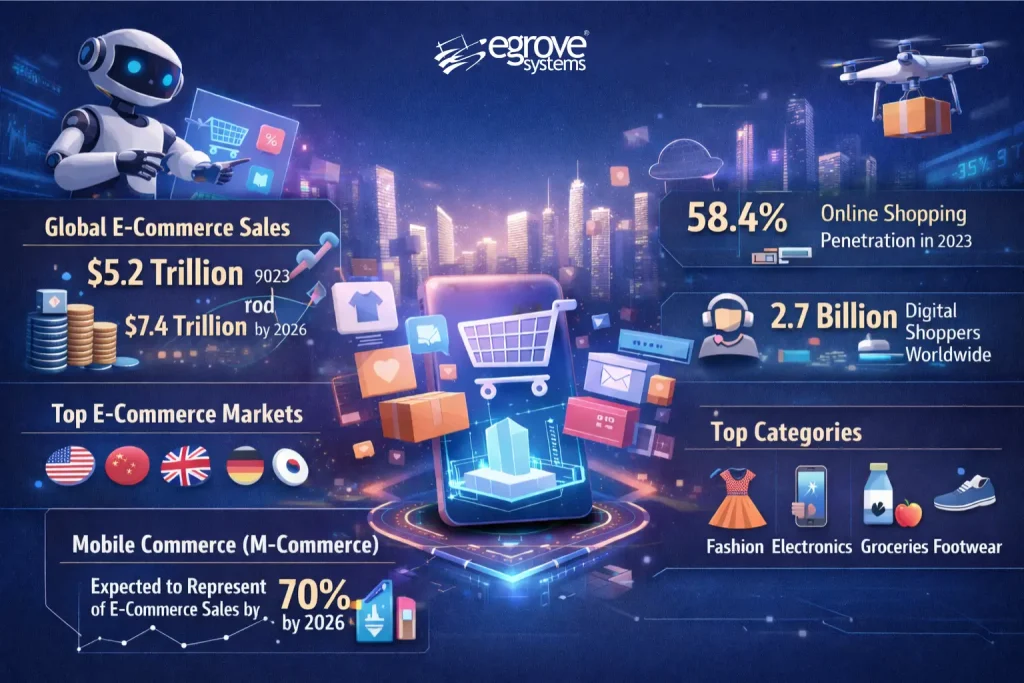
As we move into 2026 in the online shopping world, we move towards intent prediction as the next major shift. AI models will begin to use behavioral signals, micro-interactions, and purchase history to predict what customers want before they even search for it.
Think of it as commerce without searching; where predictive machines will push contextually relevant ideas, potentially bundled offers or even subscription nudges at the peak moment of buyer intention. AI doesn’t just reduce the chaos; it creates convenience and a smooth user experience, which builds brand loyalty and repeat purchasing patterns.
Powering Personalization in Ecommerce
Generic recommendations are out. By 2026, personalization is expected to result in micro-segmentation, where AI will create customer experiences for each unique consumer. In addition, online stores will have the ability to make adaptive product displays, pricing, and communication for every individual consumer through new revolutionary deep learning models and real-time data.
An example might be an AI that updates the homepage banner based on that shopper’s browsing history, tailored bundle offers specific to just that consumer’s previous purchases, or timely notifications, messages, or emails sent to the customer at the same time for maximum engagement.
Stronger Cybersecurity
As transaction volumes surge, the number of fraudulent attempts also surges. By 2026, an AI enabled detection and security system will also help curtail and enforce this rigor with tiered access and instill consumer trust. The latest machine learning models will study machine behaviors and identify anomalous patterns in real time that threaten the protection of customer data and seamless flow of payments.
But AI simply doesn’t mitigate fraud. AI will potentially enhance the process of building transparency, trust, and even brand authenticity using blockchain tracking methods, bringing transparency and assurance to consumers around product authenticity and ethical sourcing.
Optimizing Supply Chain and Logistics
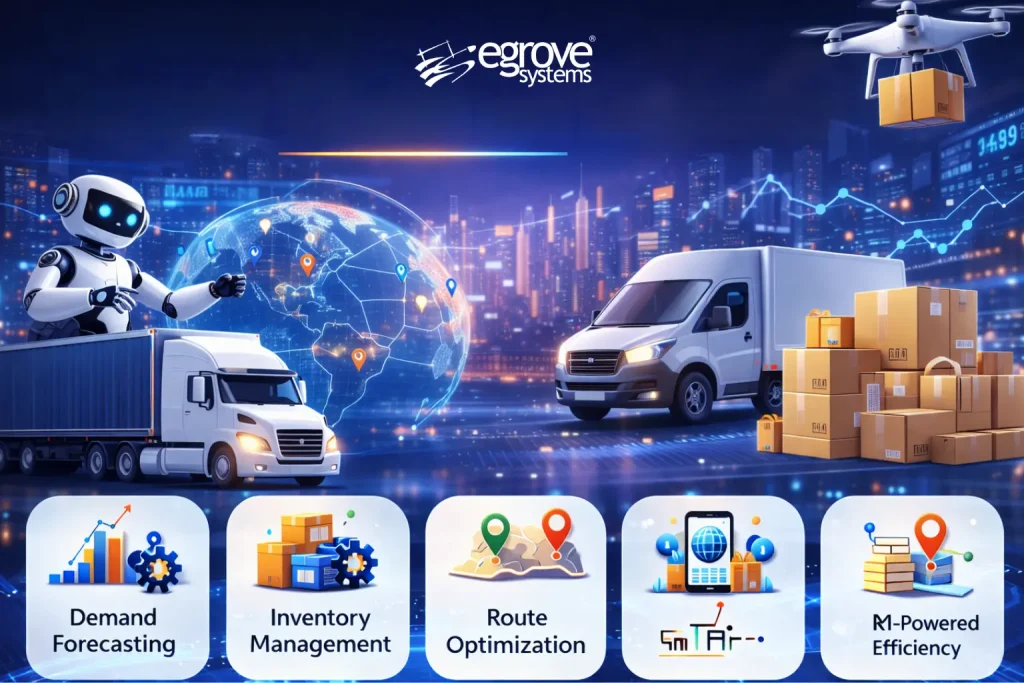
Behind the scenes, AI is making e-commerce operations leaner and more resilient. Predictive analytics is helping retailers forecast demand, better manage inventory and even recommend alternative suppliers in real time.
In logistics and order fulfillment, AI-based algorithms are helping route optimization and intelligent warehousing to reduce delivery times and costs. Together with robotics and computer vision capacities, fulfillment centers have the potential to be self-regulating systems, with little to no human oversight.
Visual and Voice Commands
Interaction with users of e-commerce is no longer limited to typing in keywords. As machine learning models linked to AI for recognition evolve, so too will visual and voice commerce modes.
Consumers can now take a photo to find similar products or use natural language voice prompt features to find the items they want quickly and efficiently. Retailers leveraging these features will sell more products than those who don’t, as the experience becomes less disruptive and more natural.
Boosting Sustainability In Ecommerce
Sustainability has moved beyond its status as a buzzword and has entered a place of operational necessity. E-commerce companies are using AI to drive green optimization, such as reducing packaging waste by way of predictive logistics or optimizing any logistics in their warehouses to optimize energy use.
With generative AI, brands can initiate sustainable innovation through simulating a product’s life cycle and optimising materials and supplies before a product goes into production. Going into 2026, we will see eco-sustainable brands increasingly utilizing AI enabled insights and optimizing profit-based, purposeful to find the balance of profit whilst still being profit-based and purposeful.
Conversational Retail Experiences
The ever-increasing advent of conversational AI is reshaping customer service channels into self functioning support ecosystems. Chatbots and virtual agents are now capable of recognizing the emotional tone and contextually relevant recommendations for even the most complex of customer inquiries, taking AI-powered shopping to the next level. For global e-commerce organizations, this also means each support language can scale, while not also needing to increase staff levels.
Smarter Ecommerce with eGrove Systems

The digital retail equipment is increasingly becoming AI-focused, impacting the customer experience from first touch point to the final payment and beyond. For businesses wishing to expand with the evolution, eGrove Systems offers the AI centered solutions to accompany you to success. Our experts work with you to help your platform become more AI-relevant, making sure every user experience is seamless. To make sure your website and, in turn, business stay ahead of the pace, connect with our teams today. We will help you build stronger capabilities.
Conclusion
The e-commerce world of 2026 is not simply smarter; it is strategically intelligent. Artificial Intelligence has subsequently shifted from an enabler on the back-end to the architecture that is helping digital commerce operate. From personalized and predictive analytics to autonomous logistics and conversational experiences, AI’s evolution is leading us to a world where data becomes dialogue and algorithms become empathy. While the pace of that evolution will likely accelerate, the successful companies will be the ones that utilize AI to complement and align with us as humans.