

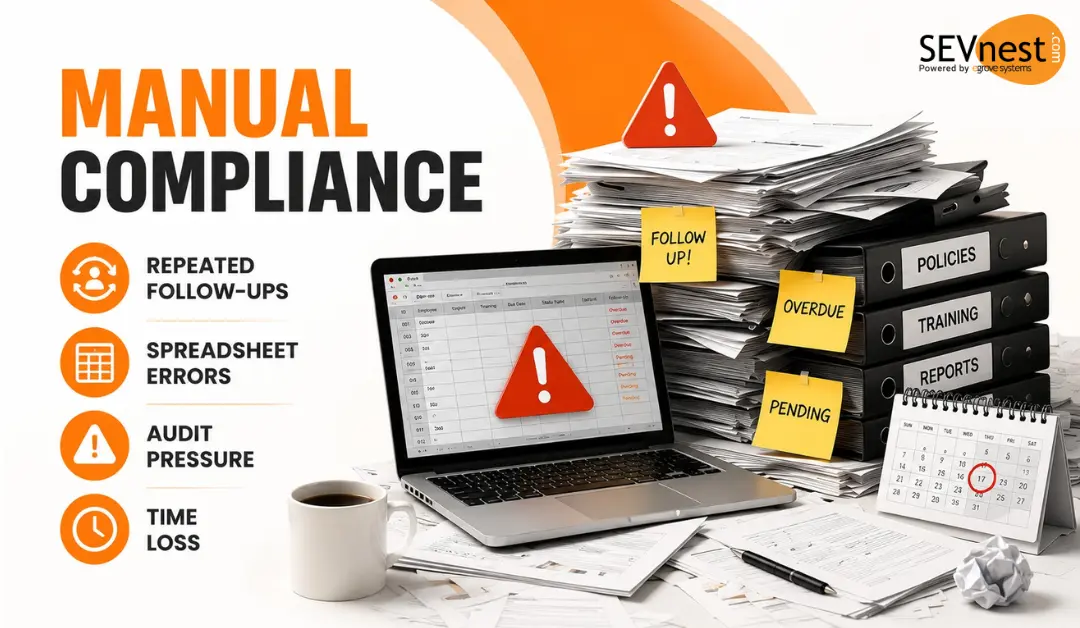
Compliance management often feels heavier than it should. Many organizations spend a significant amount of time tracking employee training, updating spreadsheets, sending reminders, and organizing documents for audits. As regulatory requirements continue to grow, these repetitive tasks place increasing pressure on compliance, HR, and operations teams.
What begins as routine administration can quickly become a major burden. When compliance depends on manual effort, even small oversights can create serious consequences. A missed deadline, an outdated record, or an incomplete report can lead to audit findings, legal exposure, and unnecessary costs.
AI is changing this reality by reducing repetitive work and helping organizations manage compliance with greater speed and accuracy.
SEVnest helps organizations automate compliance activities, reduce administrative workload, and maintain audit-ready records from one centralized platform.
Why Compliance Feels Heavy
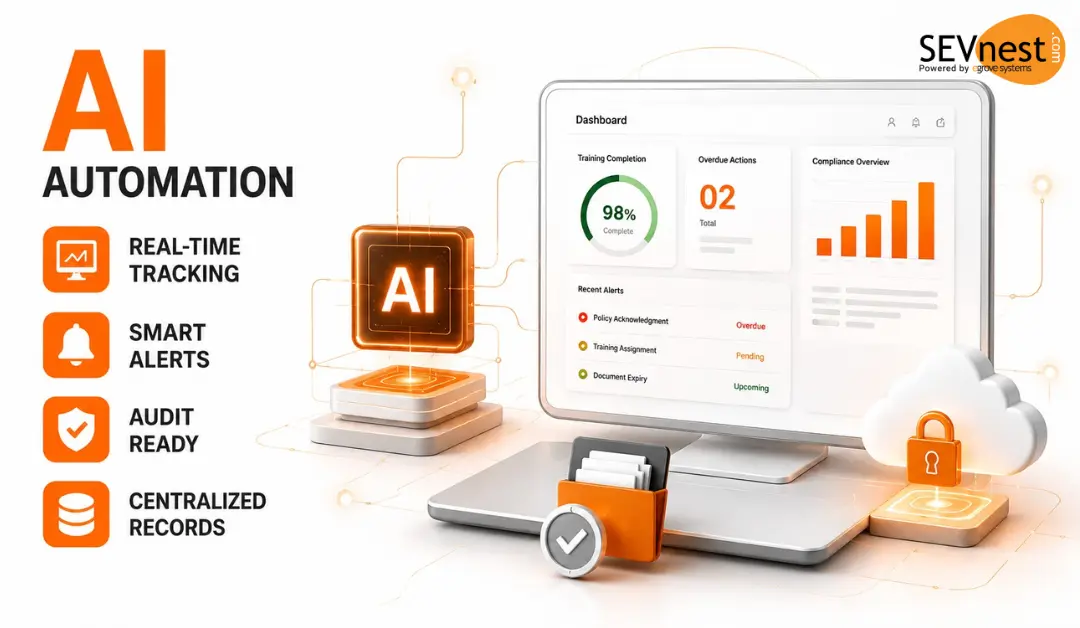
Compliance is not a one-time task. It is an ongoing responsibility that touches multiple departments and requires constant attention.
Organizations must deliver mandatory training, track policy acknowledgments, monitor deadlines, maintain accurate documentation, and prepare for audits. Each task may seem manageable on its own, but together they create a substantial workload.
When teams handle these activities manually, they often spend more time on administration than on strategic risk management.
Common challenges include the following:
- Repeated follow-ups with employees
- Time-consuming updates to spreadsheets
- Difficulty finding accurate records
- Limited visibility across teams
- Increased pressure during audits
As the organization grows, these manual tasks become harder to control and more expensive to maintain.
Manual vs Automated Compliance Management
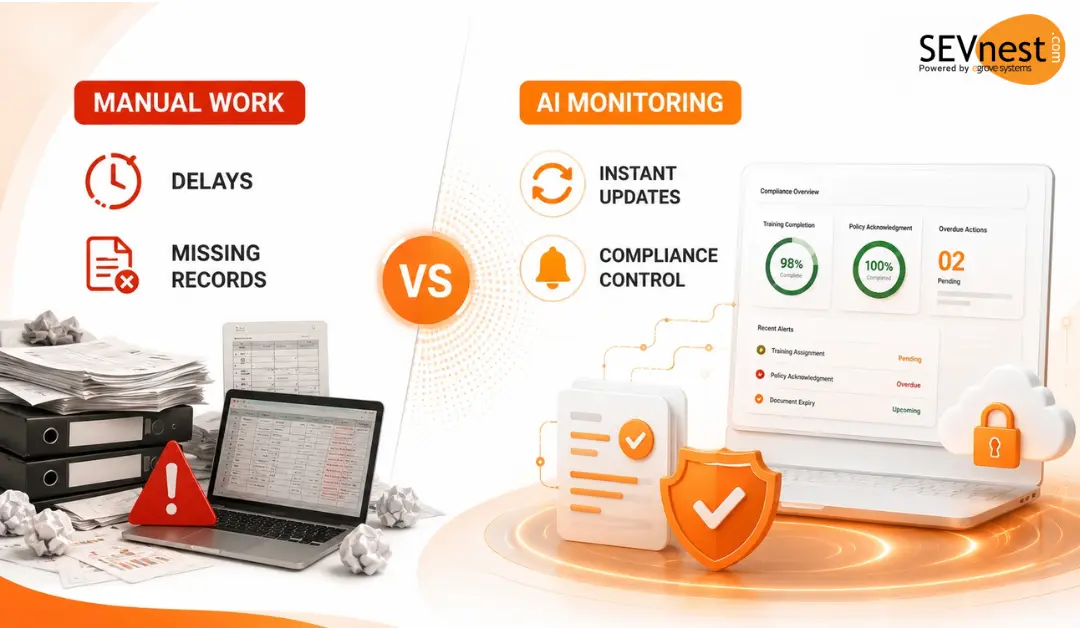
The difference between manual and AI-driven compliance is not just speed. It is the difference between constant effort and controlled automation.
Manual Compliance Management
- Spreadsheets and disconnected systems
- Repeated follow-ups
- Manual record updates
- Limited visibility
- Last-minute audit preparation
AI-Powered Compliance Management
- Automated tracking and monitoring
- Real-time status updates
- Instant alerts for missing actions
- Centralized records
- Continuous audit readiness
Manual systems depend on people remembering every step.
AI-powered systems help prevent gaps before they affect the organization.
The Time and Cost Impact of Manual Compliance
Manual compliance management can create hidden costs that grow over time.
Teams spend hours each week sending reminders, verifying completion status, collecting documents, and preparing reports. These tasks consume valuable time that could be spent on improving processes and reducing risk.
The impact includes:
- Higher administrative costs
- Lower team productivity
- Slower response to compliance issues
- Increased risk of penalties
- Greater audit preparation stress
The most significant cost arises from the risk that auditors face when they overlook critical tasks or when records are unavailable.
AI-Driven Efficiency That Reduces Risk
AI helps organizations automate routine compliance work and improve the accuracy of their processes.
Instead of relying on manual follow-up, AI continuously monitors training, policy acknowledgments, and deadlines. It highlights overdue actions, updates records automatically, and provides timely alerts when you need to pay attention.
With AI-powered compliance management, organizations can:
- Track training and policy completion automatically
- Detect overdue or missing actions
- Receive alerts before deadlines are missed
- Maintain organized and up-to-date records
- Reduce repetitive administrative work
- Improve reporting accuracy and consistency
By removing much of the manual effort, AI allows teams to work more efficiently while strengthening compliance control.
How SEVnest Delivers More Than Basic Automation
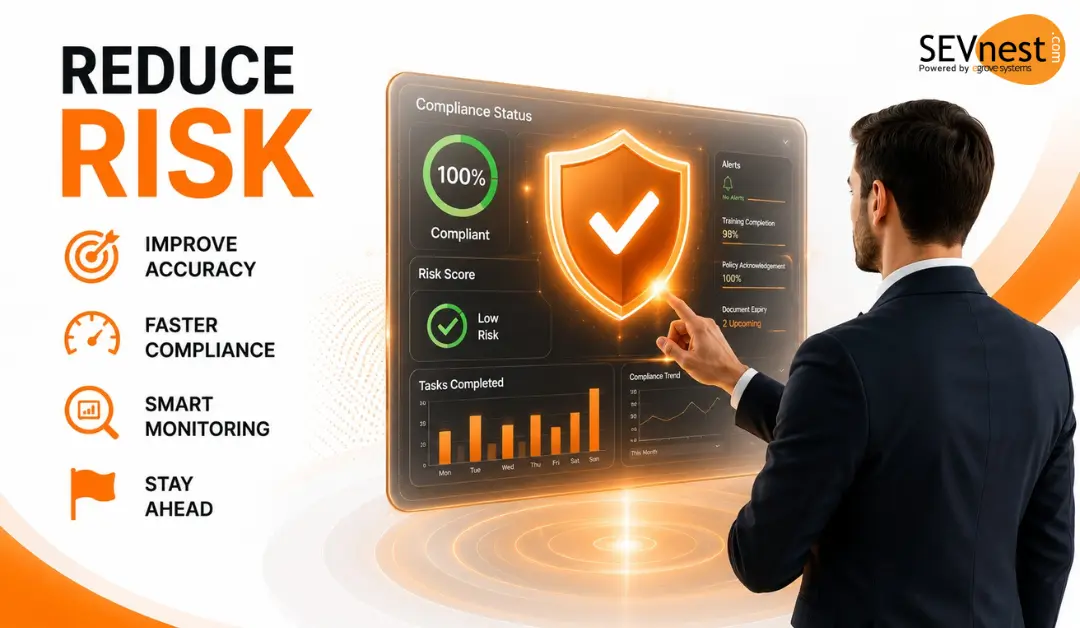
Many tools can record completion status, but few are designed to help organizations reduce manual effort while also improving audit readiness and compliance verification.
SEVnest combines automation, centralized documentation, and intelligent monitoring to give organizations greater visibility and control.
With SEVnest, organizations can:
- Automate compliance tracking across departments
- Centralize records in one secure platform
- Verify participation and assessment integrity
- Receive real-time alerts for compliance gaps
- Maintain structured, audit-ready documentation
- Improve reporting and executive visibility
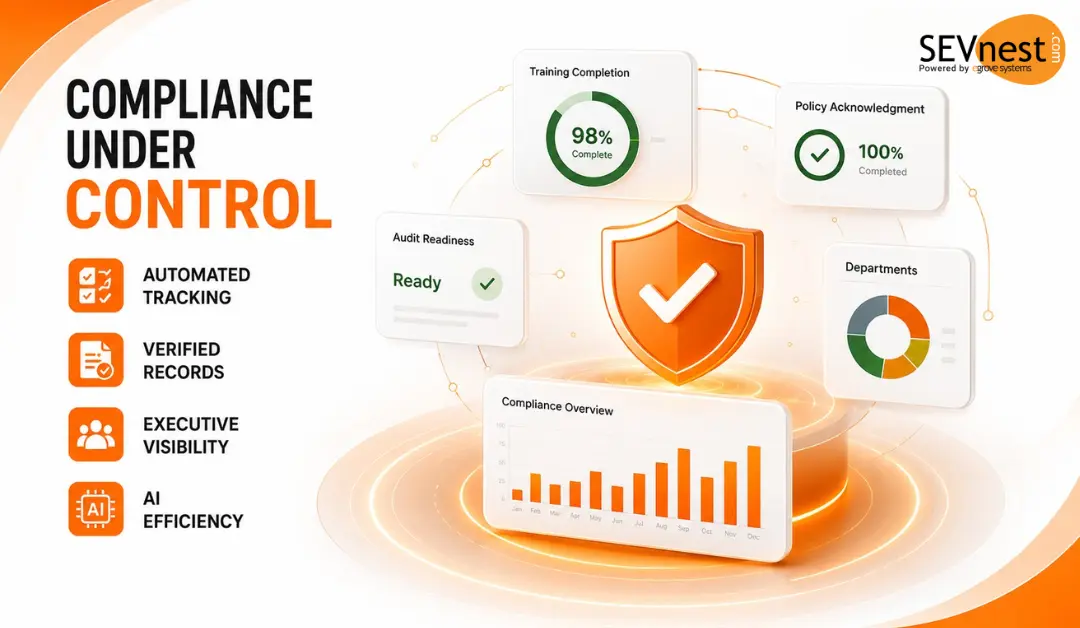
Unlike basic systems that only display data, SEVnest helps organizations manage compliance more efficiently and prove it with confidence.
Final Thoughts
Compliance should not require teams to spend countless hours on repetitive administrative work.
When organizations rely on spreadsheets and disconnected tools, the workload increases and the risk of errors grows. This approach becomes more difficult to sustain and more expensive to administer over time.
AI offers a better way. By automating routine tasks, improving visibility, and keeping records organized, organizations can reduce manual effort and strengthen compliance performance.
SEVnest goes beyond simple automation by helping organizations verify compliance, maintain audit-ready proof, and stay ahead of regulatory requirements.
The goal is not only to save time. It is to build a compliance process that is more accurate, more efficient, and easier to defend.
SEVnest helps organizations reduce manual work and gain the confidence that comes from having compliance under control.