
HIPAA compliance training is essential for any organization that handles protected health information (PHI). Even routine employee actions such as sending emails, sharing documents, or accessing systems without proper care can unintentionally lead to PHI breaches.
By providing employees with clear guidelines and practical awareness, organizations can significantly reduce accidental disclosures and strengthen accountability.
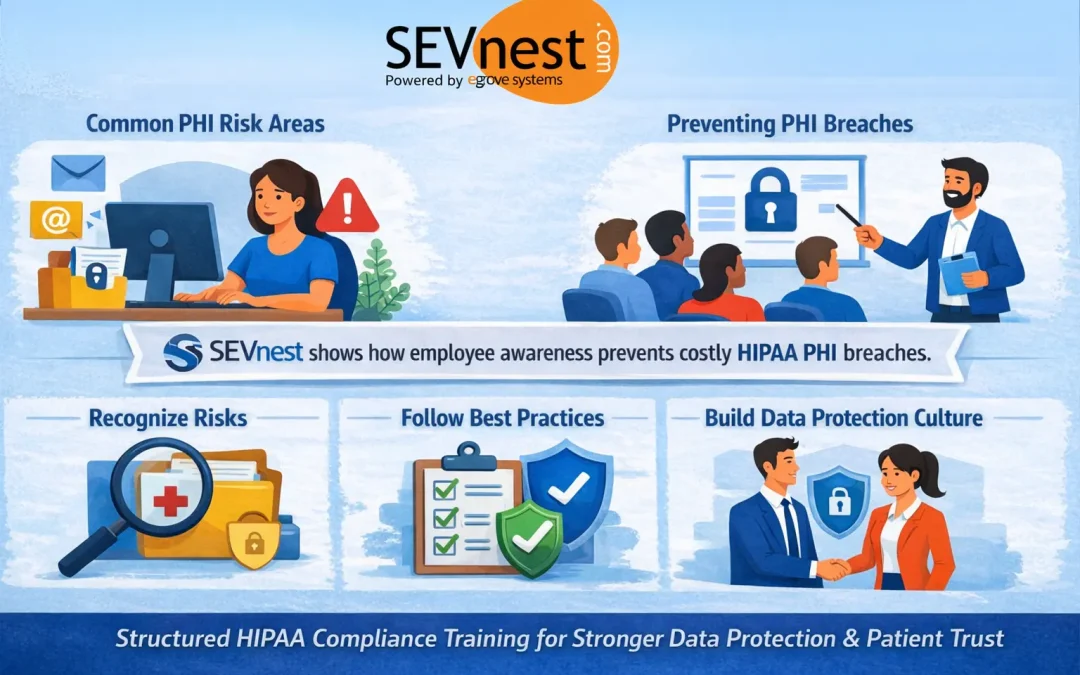
SEVnest explains how employee awareness prevents HIPAA PHI breaches, highlights common risk areas, and outlines actionable training approaches. We offer structured HIPAA compliance training that helps teams recognize risks, follow best practices, and build a culture of data protection and trust.
Understanding HIPAA Employee Responsibilities
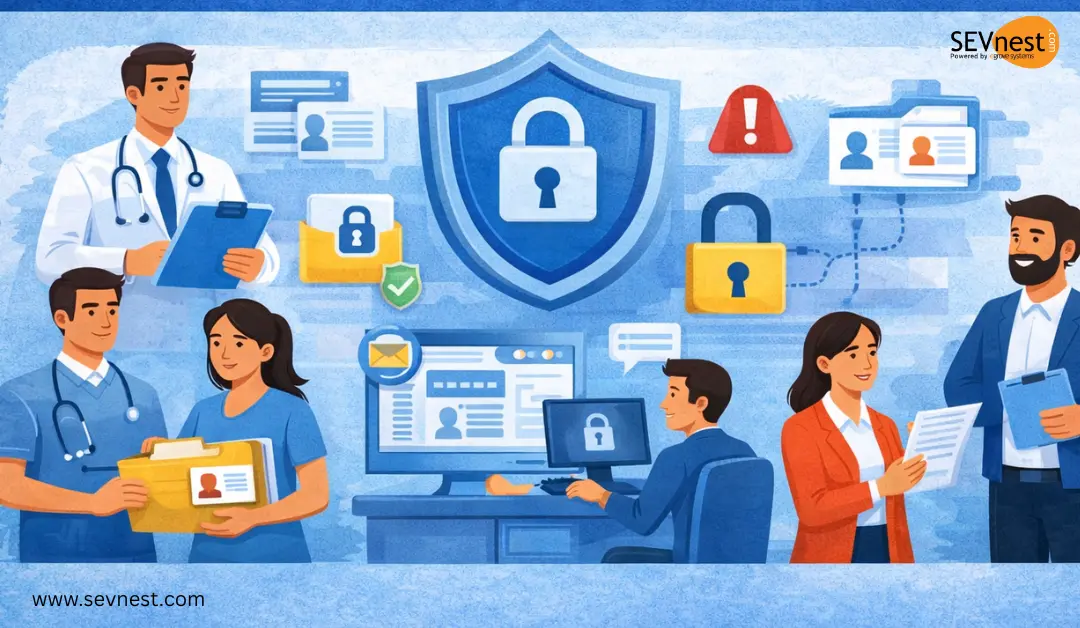
HIPAA compliance training helps employees clearly understand their responsibilities when handling PHI. Training focuses on everyday activities, access controls, and secure work practices that reduce the risk of accidental exposure and ensure standardized compliance across roles.
Ensuring Everyday PHI Safety
Protecting PHI is not only a legal obligation, but it is also a shared responsibility. When employees understand their roles and expectations, organizations can prevent accidental exposures and reinforce accountability at every level.
Employee Roles in PHI Protection
All staff who interact with health data must know:
- What constitutes PHI: medical records, personal identifiers, billing information
- How access controls work: Role-based access prevents unauthorized viewing
- When to report concerns: early reporting limits the spread and impact of risks
Common Risk Points
- Emails & messaging: sending PHI through unsecured channels
- Shared devices: unlocked systems or shared workstations
- Inadequate logouts: unattended sessions enabling unauthorized access
Defining Responsibilities
Clear documentation and role descriptions ensure:
- Employees understand compliance expectations
- Managers enforce secure practices consistently
- New hires are onboarded quickly with HIPAA requirements
Employee HIPAA awareness strengthens frontline protection and reduces dependency on IT alone to safeguard sensitive health information.
Core Elements of Effective HIPAA Training
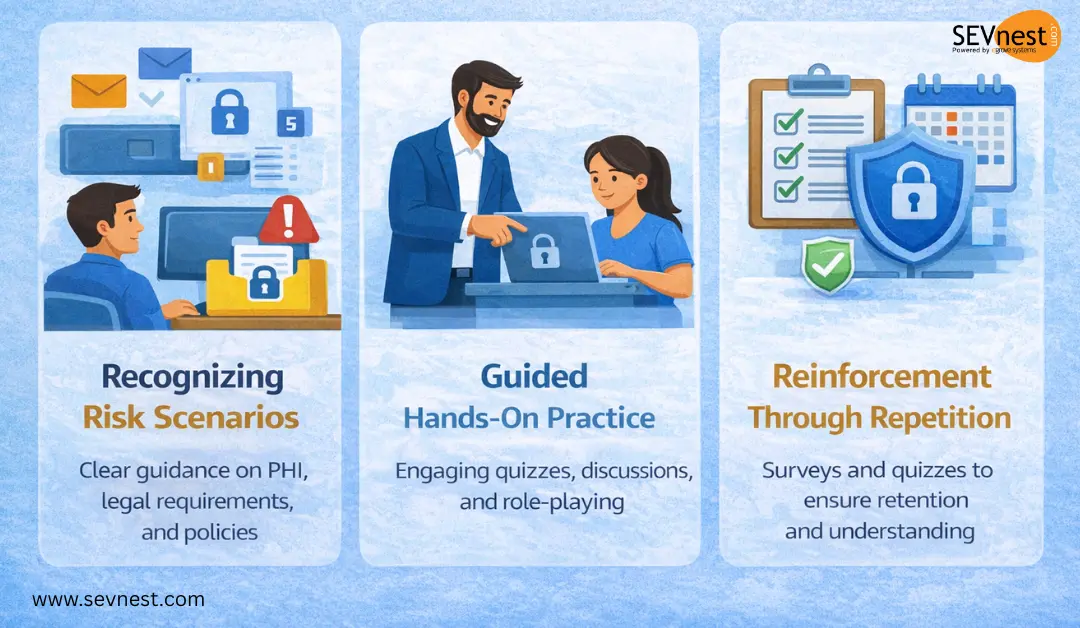
Effective HIPAA compliance training goes beyond policy awareness. Our high-quality, practice-based training can assist employees in discovering risk scenarios, utilizing compliant behavior, and adequately responding to real-life situations, which otherwise might result in PHI breaches.
Recognizing Risk Scenarios
Training should cover:
- Email mishandling of PHI
- Physical document exposure in shared spaces
- Mobile and remote-work vulnerabilities
Guided Hands-On Practice
Employees learn best when training includes:
- Simulated scenarios of PHI misuse
- Interactive quizzes on incident responses
- Role-based practices relevant to job functions
Reinforcement Through Repetition
One-time training isn’t enough. Best practices include:
- Quarterly refreshers sessions
- Policy updates through internal channels
- Assessment tracking and certifications
SEVnest’s structured compliance modules explain how employee awareness prevents HIPAA PHI breaches by demonstrating scenarios and solutions, helping staff internalize secure behavior.
Building a Culture of HIPAA Compliance
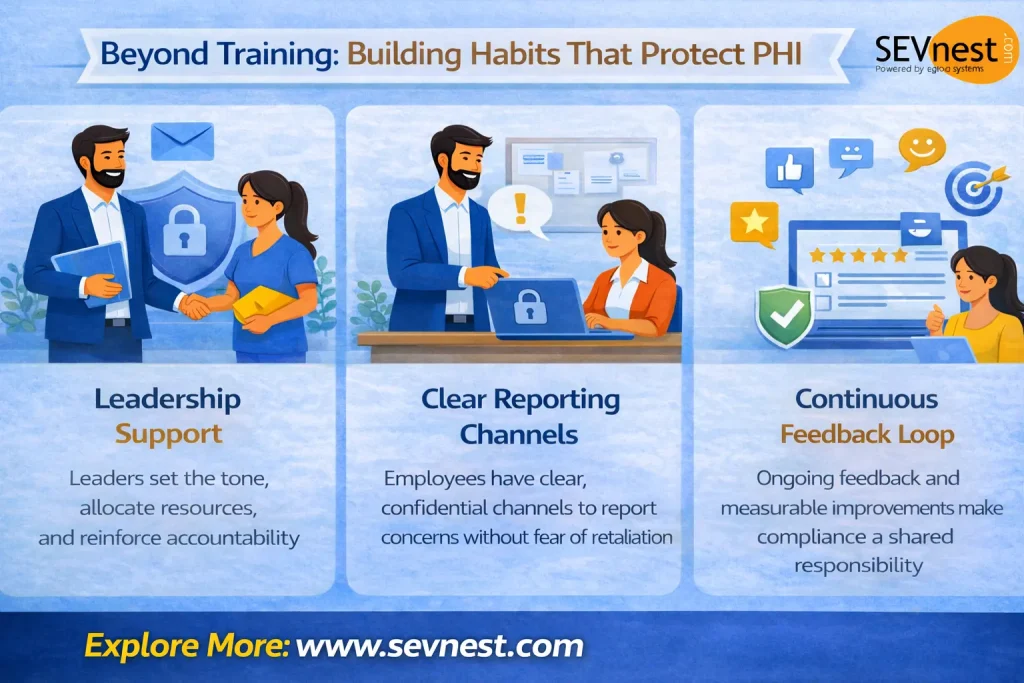
HIPAA compliance training succeeds when it becomes part of the daily work culture. We assist the organizations to instill awareness by continuing education, strengthening leadership, and maintaining transparent reporting practices so that employees can always guard PHI and reinforce long-term compliance.
Beyond Training Habits That Protect PHI
Organizational expectations, leadership reinforcement, and follow-ups are the factors that influence the behavior of employees and ensure that the protection of PHI is always on their minds.
Leadership Support
HIPAA compliance must be embraced by:
- Executive leadership
- Department managers
- HIPAA privacy officers
Strong leadership signals the importance of compliance and legitimizes training initiatives.
Clear Reporting Channels
Employees should know:
- Where to report suspicious activity
- How to escalate potential breaches
- Confidential means to share concerns
Setting expectations eliminates hesitation and ensures incidents are caught early.
Continuous Feedback Loop
The programs are listed below:
- Collect feedback on training effectiveness
- Update content based on emerging risks
- Celebrate compliance success to encourage participation.
At SEVnest, our approach includes the ongoing reinforcement and policy updates that help embed employee HIPAA awareness into everyday work habits.
Prevent PHI Breaches
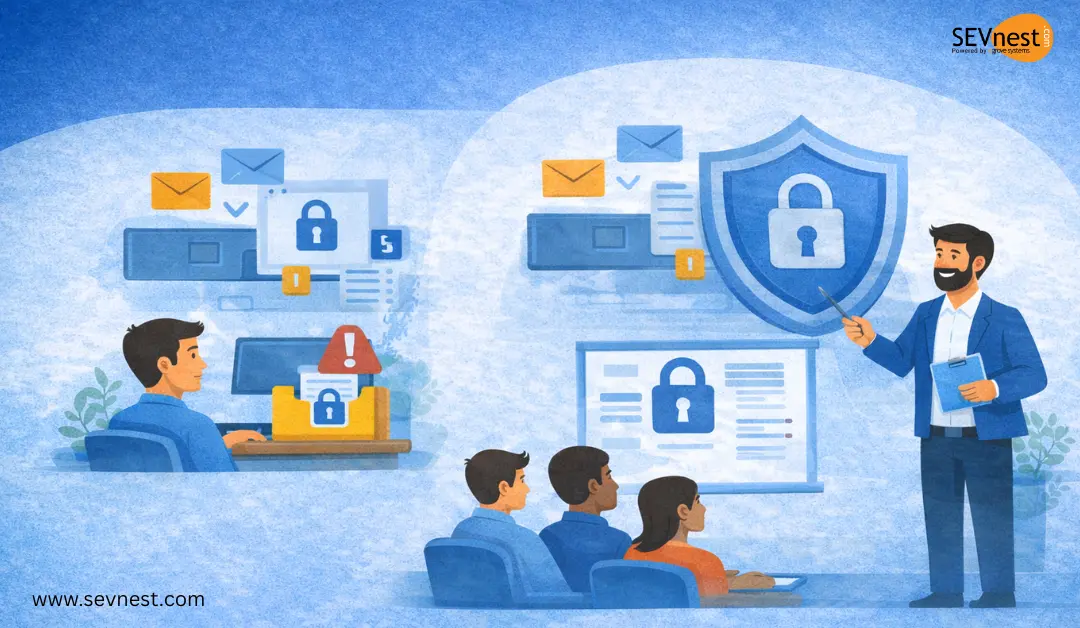
HIPAA compliance training plays a vital role in preventing PHI breaches by turning everyday employee actions into first-line defenses. When employees understand risks, access controls, and secure data handling, accidental disclosures are significantly reduced.
SEVnest’s practical, structured HIPAA training equips your workforce with the knowledge and skills needed for long-term compliance. Build a culture of awareness, protect patient trust, and safeguard your organization’s reputation.
Contact SEVnest to strengthen HIPAA compliance and prevent PHI breaches.