

SEO has a history of quickly adapting with technology. From keyword stuffing in the early 2000s to voice and mobile-first search as is common today. But 2026 is a new turning point. The rise of AI in SEO is quickly changing how content is created, optimized, and discovered.
Before, the work done by a team of marketers, analysts, and developers in days to accomplish is now being done in minutes through the automation, predictions, and refinement processes of artificial intelligence in SEO.
How AI Will Change SEO in 2026
Search engines have been advanced to become more intelligent. RankBrain, BERT, and MUM are AI-based algorithms that Google uses to determine the intent of the search, context, and relevance. The marketing people are now thinking and optimizing like the search engines because of AI-powered SEO strategies.

SEO will not just be based on research keywords starting in 2026. It will depend more on behavior patterns, and when to predict engagement. Marketers are shifting away from following the updates out of algorithms, and instead aligning their strategy to how AI thinks.
Three key changes can be seen:
- Intent-First SEO Over Keyword-Only Optimization: AI can decode user intent behind a search to give relevance, validating content alignment means it is the same as the user meant and not what they typed.
- Data Based Creativity: AI tools can go through millions of data points and recommend topics, keywords, and structure with a greater chance of engagement.
- Real-Time SEO Adjustments for Continuous Optimization: Businesses can monitor performance in real time and make changes to maximize their visibility and conversions.
AI for SEO: Going Beyond Automation
Automation has solved marketers’ needs for performing repetitive SEO tasks for years, such as backlink audits or rank tracking. AI in SEO has taken it further. AI challenges us to understand language, emotions, and behaviors all in one, therefore making SEO human-driven at the same time while data-driven. Artificial intelligence is changing the fundamentals of SEO in 2026 in the following ways:
Smarter Keyword & Topic Research With AI in 2026
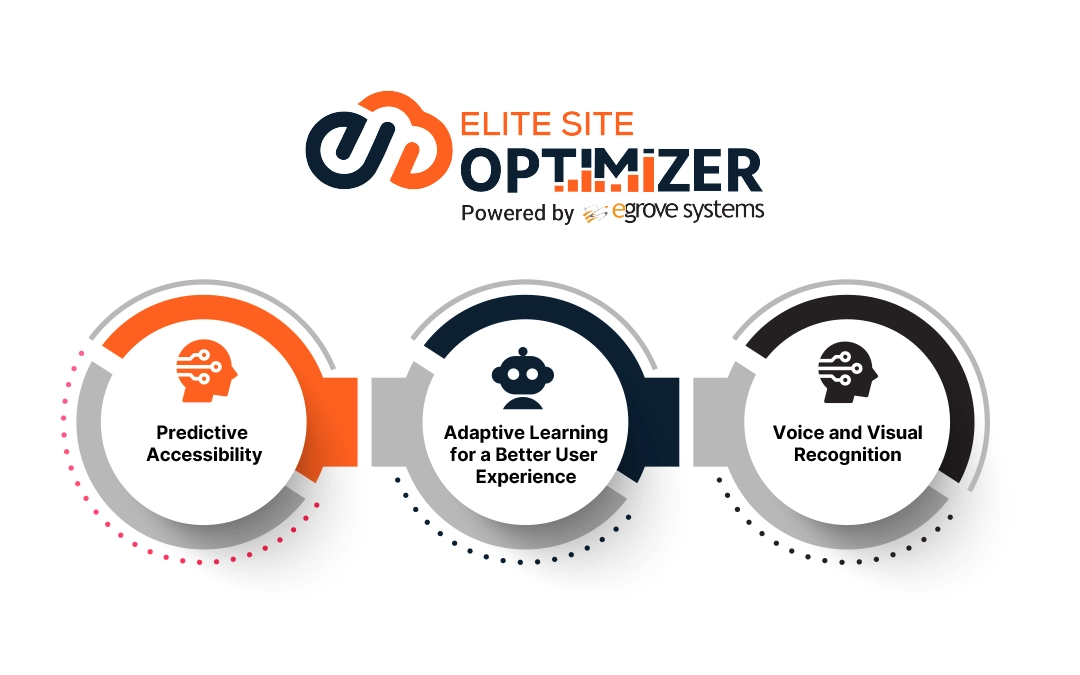
The role of keyword tools is gradually being replaced by AI tools. The AI may comprehend the will of a search and propose topic clusters. AI does not simply assist sellers to target their content with one or two keywords. It helps in identifying content ecosystems, or collections of related topics that confer authority and rankings of potential.
AI can examine user journeys and provide recommendations on related subjects depending on various stages of the funnel, from awareness to consideration to final decision. All of which ensure the information is relevant and comprehensive.
Predictive SEO: Anticipating What Users Will Search Next
Generative AI for SEO enables marketers to anticipate what users may search for next. Predictive models can analyze user behavior, seasonality, and conversational patterns to proactively generate content before demand reaches a tipping point. This proactive paradigm replaces the outdated reactive model of SEO. Instead of playing catch-up to trends, businesses are proactively ahead of the trends.
AI-Powered Content Optimization for Higher Rankings
Modern day AI tools do not simply recommend keywords, they are able to analyze tone and readability and engagement signals. AI models trained on search engine data analyze content against hundreds of factors to ensure the content aligns with best practices.
AI writing assistants are also designed to create structured content that simultaneously meets the requirements for SEO and user experience.
Voice & Visual Search Intelligence in 2026
Thanks to AI models driving the visual and voice recognition, SEO is smarter than ever. Optimizing content to be relevant in search based on image is similar, but also requires knowledge of natural language cues and voice command, both of which artificial intelligence in SEO will be able to intelligently infer.
Businesses are optimizing metadata, captions, and descriptions for voice-friendly queries by utilizing inclusion across SERP formats.
Hyper-Personalized Search Experiences Powered by AI
AI enables customization of the content, whereby webpages are customized on-the-fly to the behavior, location, or device of the visitor. An example was that two searchers of the word “best running shoes” may have different results because of previous purchases or a history of browsing. This type of micro-personalization increases the level of engagement on websites as well as time-on-page, which in turn helps to boost the SEO ranking on its own.
The Rise of Generative AI in SEO

Generative AI for SEO is likely the most significant. AI has scaled and adjusted the way all content is created, updated, and distributed.
AI-generated content is projected to make up 90% of all online content by 2026, Forbes
Generative AI for SEO can:
- Generate high-quality, well-researched, professional level content, and optimize it for search engines.
- Repurpose or rewrite previously created content for various content formats.
- Provide metadata, summaries, and frequently asked questions that are aligned to user intent.
- Provide potential improvements for content in real time using real time search engine analytics.
Data-Driven SEO Decision Making with AI
One of the most valuable contributions of AI in SEO is when it converts raw data into actionable insights. AI identifies precisely what’s happening and what’s not, by evaluating CTR, bounce rates, and conversion paths. Such insights allow businesses to:
- Focus on content that leads to the most impact.
- Detect ranking variances and drop-offs earlier.
- Predict outcomes of SEO performance.
- Budget realignments accordingly depending on projected ROI.
Challenges of AI in SEO
AI has its level of accuracy, and scalability, however, it also poses challenges. Here are some of the challenges that users face:
- Data Dependency & Quality Control: Quality data is required for AI to provide quality intelligence. Incomplete data or bad quality data can inform bad recommendations.
- Reliance on Data: Relying on AI, we may find our content to be generic and less true to the brand.
- Keeping Up With AI-Driven Search Algorithms: The high frequency of change caused by AI tools and algorithms will require SEO professionals to continually learn and adapt to the changes if they desire to remain relevant.
AI Is Redefining SEO in 2026, Adapt Now

The growth of SEO with AI is only going to continue to grow. By the time we get into 2026 organizations that are willing to leap and embrace the analytical and generative power of AI will have a distinct advantage, creating content that is discoverable, relevant, meaningful and engaging.
While search engines become more human-like in purpose, intent, emotion, and context, SEO tactics that worked will be obsolete. The future belongs to those that evolve in the SEO space, using generative AI for SEO, predictive analytics, and storytelling to create hyper-intelligent search and reading experiences. Lead the future of search with elite site optimizer AI-driven SEO tools delivering precision, performance, and predictability. Future-ready SEO belongs to brands that embrace AI, start your transformation with Elite Site Optimizer today.