
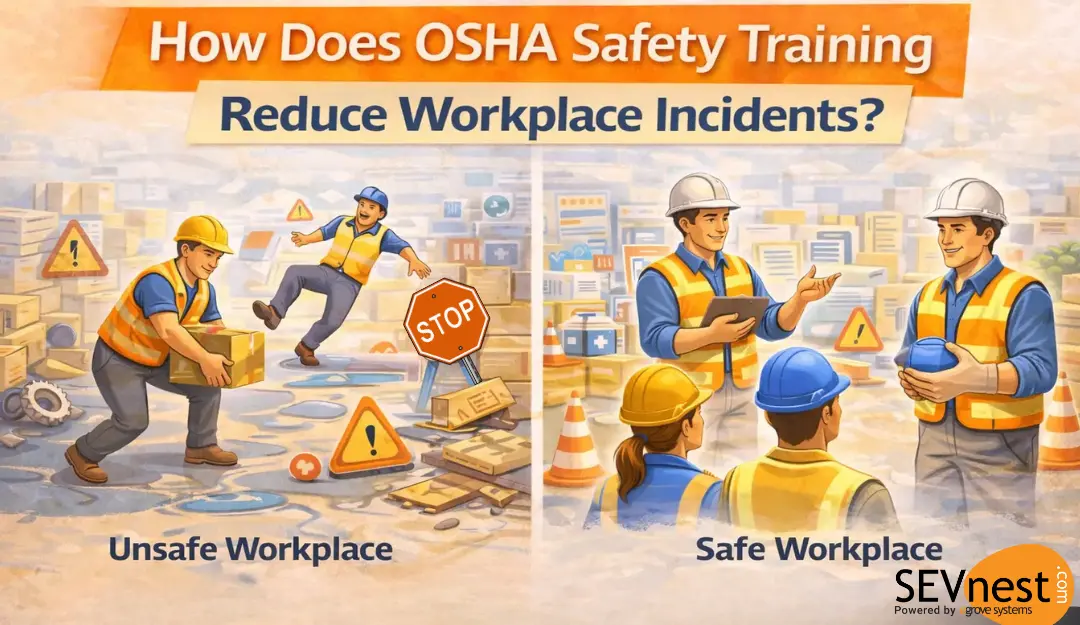
Understanding OSHA safety training is essential for any employer aiming to create a safer workplace and reduce the frequency of workplace incidents. The Occupational Safety and Health Administration (OSHA) requires employers to provide employees with proper safety training related to workplace hazards, procedures, and protective measures relevant to their roles.
Regular OSHA safety training helps employees recognize potential dangers and apply safe working practices during daily operations. At SEVnest, we help organizations understand how mandatory OSHA safety training reduces workplace incidents, how to structure effective training programs, and why consistent employee safety compliance strengthens workforce protection and organizational performance.
What OSHA Safety Training Means and Why It Matters
OSHA safety training refers to structured education programs that help employees understand hazards in the workplace and how to prevent accidents. OSHA standards training at SEVnest covers a wide range of subjects, including hazard communication, fall protection, emergency procedures, and the correct use of personal protective equipment (PPE).
Training should be relevant and understandable to employees, considering their language, literacy levels, and specific job requirements.
Legal and Ethical Importance of OSHA Training
Meeting the OSHA training regulations is not only a legal requirement but also a fundamental component of workplace safety. OSHA mandates that employers provide safety training before workers perform potentially hazardous tasks and update training regularly.
Proper training prevents misunderstandings, reduces liability, and ensures workers know how to respond during emergencies.
Mandated vs. Recommended Training
- Mandated Training: Training required by OSHA for specific hazards or job roles.
- Recommended Training: Best-practice training that goes beyond minimum compliance requirements.
- Refresher Training: Periodic sessions to update employees on new risks, procedures, or regulatory changes.
OSHA’s training approach is based on real workplace risks, ensuring employees are prepared to handle the hazards they may face. At SEVnest, we deliver a structured OSHA safety training program that builds employee confidence, reduces confusion, and empowers individuals to take responsibility for workplace safety.
How OSHA Safety Training Prevents Workplace Incidents
OSHA safety training helps employees recognize hazards such as slippery floors, unguarded equipment, or improper chemical handling. When employees are aware of risks, they can take corrective action to prevent injuries and accidents.
Reinforcing Safe Work Practices
Training reinforces safe behaviors, making practices like proper lifting techniques, correct PPE usage, and timely hazard reporting routine. Well-trained workers are more likely to follow safety procedures consistently, significantly reducing incident rates.
Improving Incident Response & Preparedness
Employees trained under OSHA safety standards know how to respond effectively during emergencies. Whether it is a chemical spill, equipment malfunction, or medical emergency, trained workers can act quickly to stabilize situations and minimize harm.
Creating Shared Accountability
OSHA safety training fosters a culture where safety is everyone’s responsibility, not just the employer’s. Employees feel empowered to speak up, report hazards, and participate in safety discussions. This shared accountability reduces the likelihood and severity of workplace incidents.
Cost and Efficiency Benefits
Although safety training requires an initial investment, the long-term cost savings from fewer incidents, reduced lost workdays, and lower workers’ compensation claims often outweigh training expenses. A proactive OSHA safety training program protects employees while reducing organizational financial risk.
Best Practices for Implementing OSHA Safety Training
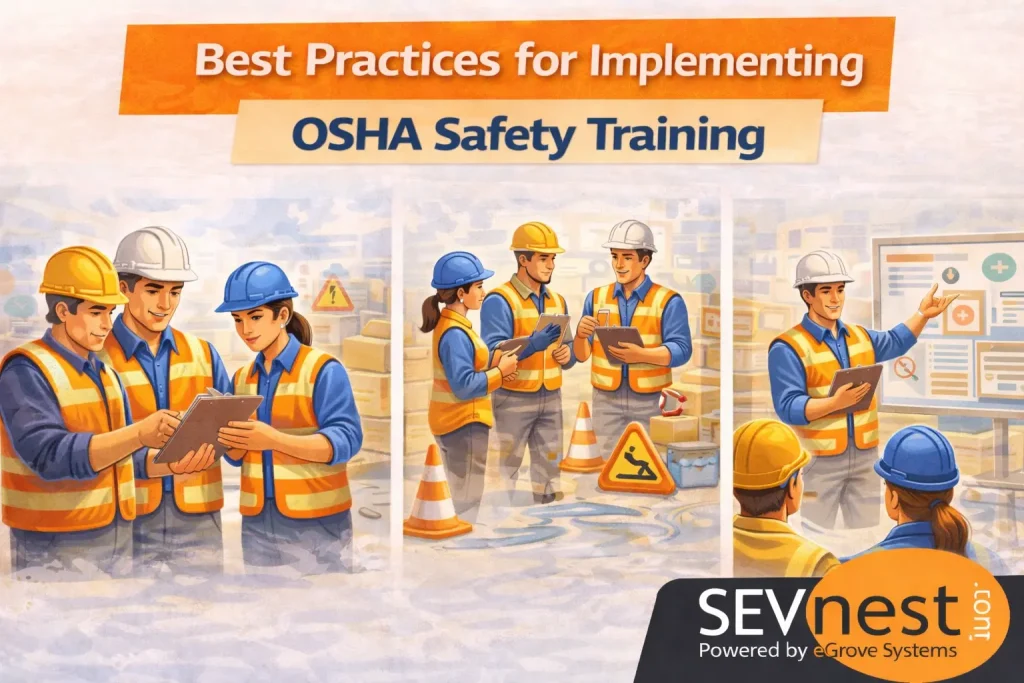
Every workplace has unique risks. Employers should analyze their operations and design training programs that address specific hazards. For example, fall protection training is critical in construction, while chemical safety training is essential in manufacturing environments.
Use Multiple Training Formats
Effective OSHA safety training includes a combination of:
- Structured digital training modules
- Visual learning materials and scenario-based content
- Knowledge checks with assessments
- Self-paced e-learning accessible across devices
Using multiple formats improves knowledge retention and accommodates different learning styles.
Ensure Accessibility and Clarity
Training should be delivered in a language and format that employees can easily understand. OSHA emphasizes comprehension, encouraging employers to consider literacy levels, technical terminology, and cultural factors when designing training programs.
Reinforce Training Consistently
Safety training should not be a one-time event. Organizations must schedule refresher sessions, update training when hazards change, and integrate safety discussions into everyday work processes.
Measure Training Effectiveness
Organizations can evaluate training effectiveness through:
- Incident rate comparisons before and after training
- Employee feedback and assessments
- Safety compliance audits
These feedback mechanisms help ensure continuous improvement and make employee safety compliance measurable and actionable.
Build a Culture of Safety
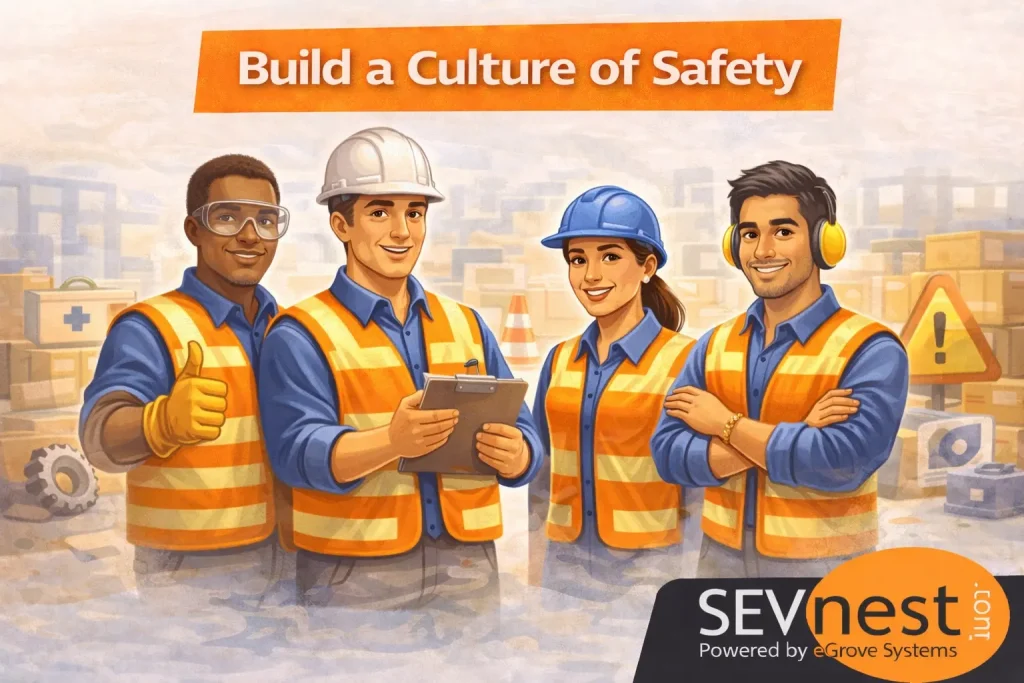
Beyond regulatory compliance, safety should be embedded in organizational culture. Encouraging open communication, recognizing safe behavior, and empowering employees to report hazards reinforce the long-term value of OSHA safety training.
Safety First Always
Workplace safety programs built on OSHA safety training play a critical role in reducing incidents and protecting employees. By educating workers on hazard recognition, reinforcing safe practices, and promoting accountability, organizations can identify risks early and prevent harm.
Well-planned safety training ensures teams remain prepared, compliant, and confident in their roles. SEVnest practical training solutions help organizations make safety a shared responsibility while strengthening workforce resilience.