
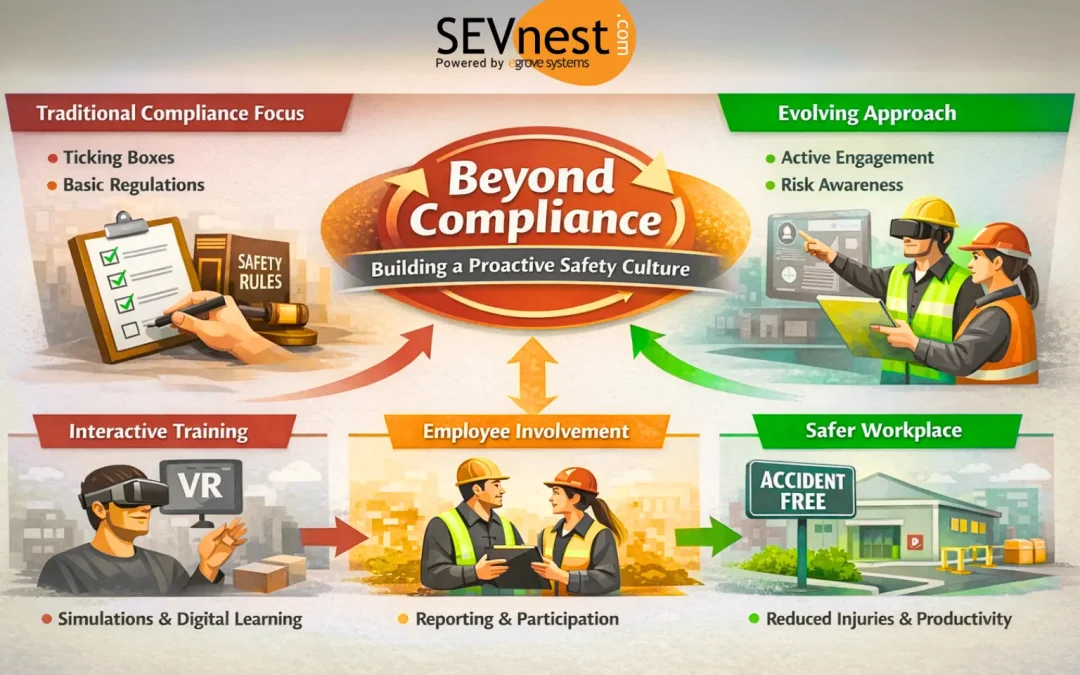
In 2026, workplace safety training can no longer remain a checkbox activity. Regulatory compliance is the foundation, but modern organizations must move beyond minimum requirements toward structured, proactive safety strategies.
Work environments are becoming more complex. Automation, hybrid operations, industry-specific regulations, and increased enforcement scrutiny are reshaping how safety is managed. Businesses that treat workplace safety training as a one-time obligation risk higher incidents, operational disruption, and regulatory penalties.
Forward-thinking organizations are shifting from reactive compliance to a preventive safety culture. SEVnest supports this transition by delivering structured workplace safety training programs designed to strengthen compliance confidence and long-term operational stability.
Compliance Is the Starting Point and Not the Goal
Traditional workplace safety training focused primarily on meeting regulatory mandates. While compliance remains essential, it is only the first step.
In 2026, regulators increasingly emphasize:
- Documented training completion
- Role-based safety education
- Hazard communication consistency
- Transparent incident reporting
- Audit-ready documentation
Meeting minimum standards is no longer enough. Organizations must demonstrate structured training processes and measurable safety engagement.
Workplace safety training must therefore evolve from simply meeting requirements to building accountability.
The Changing Nature of Workplace Risk
Workplace risks today are significantly different from those of a decade ago.
Modern risk factors include:
- Advanced machinery and automation
- Remote and hybrid workforce models
- Increased contractor involvement
- Cyber-physical system dependencies
- Rapid operational scaling
These evolving risk environments require dynamic training models. Static annual sessions cannot adequately address continuously changing hazards.
Organizations implementing role-based workplace safety training ensure employees remain informed, aware, and prepared as operational conditions shift.
From Reactive Incident Response to Proactive Risk Prevention
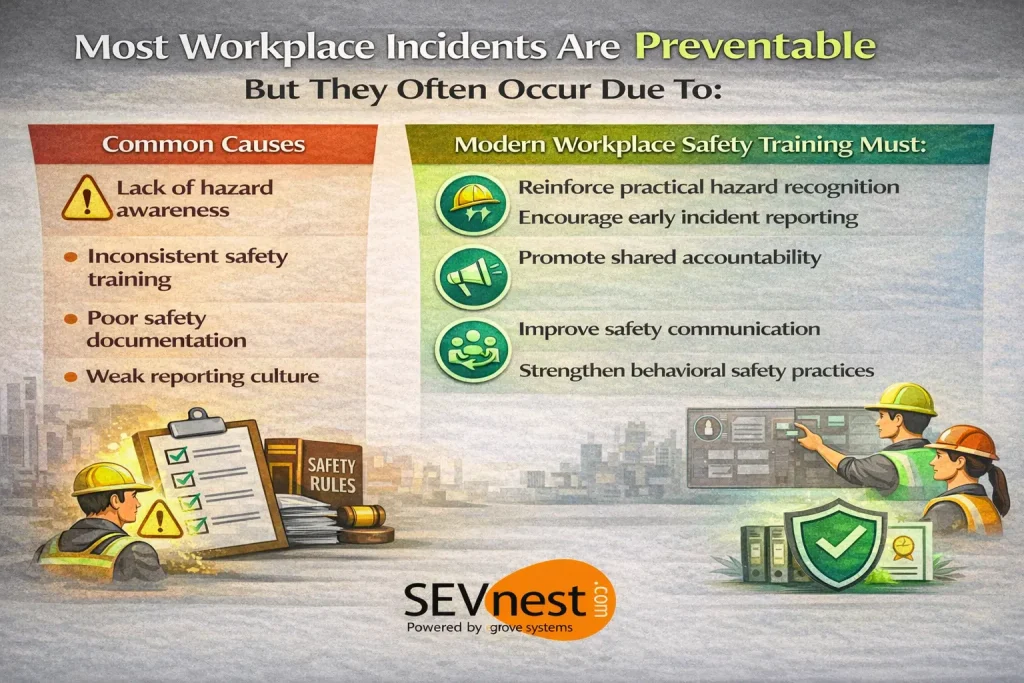
Most workplace incidents are preventable. They occur due to:
- Lack of hazard awareness
- Inconsistent training delivery
- Poor documentation practices
- Weak reporting culture
When safety training is treated merely as compliance, employees may complete modules without fully understanding their responsibilities.
Modern workplace safety training must:
- Reinforce practical hazard recognition
- Encourage early reporting
- Promote shared accountability
- Strengthen behavioral safety practices
SEVnest enables organizations to implement structured frameworks that prioritize prevention rather than correction, helping safety become part of daily operations rather than an annual requirement.
Documentation and Audit Readiness as Strategic Safeguards
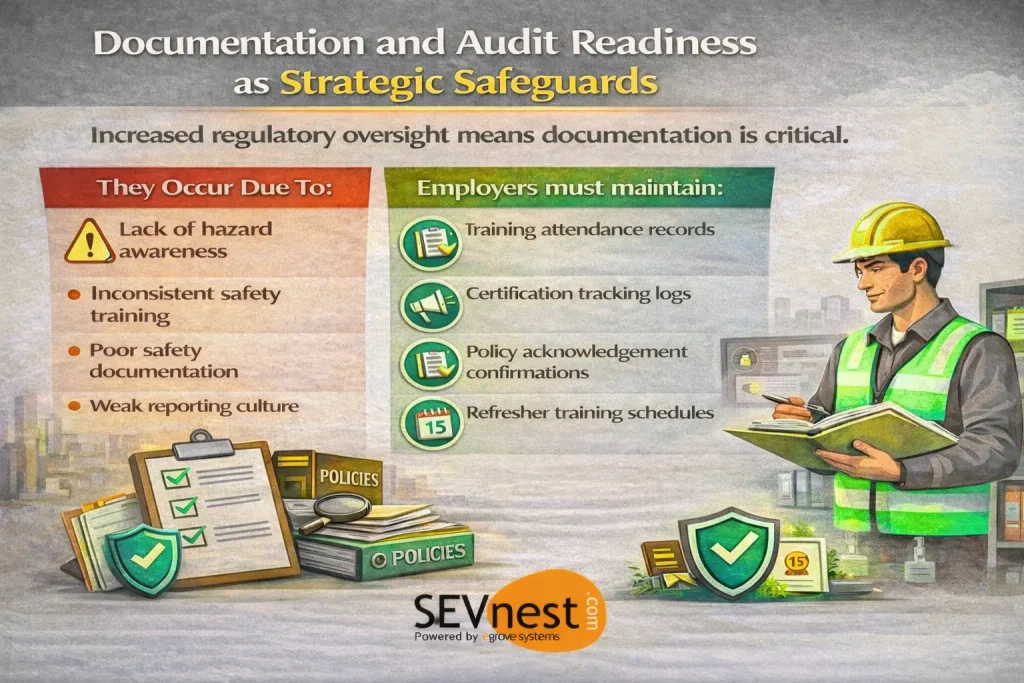
Increased regulatory oversight means documentation is critical.
Employers must maintain:
- Training attendance records
- Certification tracking logs
- Policy acknowledgment confirmations
- Refresher training schedules
- Incident documentation workflows
Failure to document mandatory safety training can result in penalties, even when safety policies exist.
Evolving beyond compliance means centralizing documentation and ensuring leadership visibility into training performance. SEVnest supports centralized compliance training management, helping organizations maintain continuous audit readiness with structured documentation control.
Building a Sustainable Safety Culture
Compliance ensures rules are followed. Culture ensures safety becomes instinctive.
When workplace safety training evolves beyond compliance, organizations begin to:
- Embed safety into daily operations
- Encourage peer accountability
- Empower employees to speak up
- Reduce hesitation around reporting hazards
A strong safety culture improves more than incident statistics. It positively influences:
- Employee morale
- Retention rates
- Productivity levels
- Brand reputation
- Insurance risk profiles
Workplace safety training becomes a long-term investment rather than a regulatory expense.
Leadership Visibility and Strategic Oversight
Modern safety programs must provide leadership with measurable insights.
Effective workplace safety training programs include:
- Completion dashboards
- Risk gap analysis
- Role-based training alignment
- Compliance performance metrics
- Refresher cycle tracking
This visibility enables informed decision-making and proactive risk management. SEVnest strengthens executive oversight through structured workplace safety compliance solutions that align safety performance with regulatory expectations.
Scaling Safety Across Growing Organizations
As businesses expand into new locations, introduce new technologies, or increase workforce size, safety complexity increases.
Workplace safety training must scale consistently across:
- Multiple departments
- Different geographies
- Varying job roles
- Changing operational processes
Evolving beyond compliance ensures that safety standards remain uniform and enforceable during growth phases.
Structured workplace safety training supports stability, continuity, and risk control during expansion.
The 2026 Shift: Safety as a Strategic Advantage
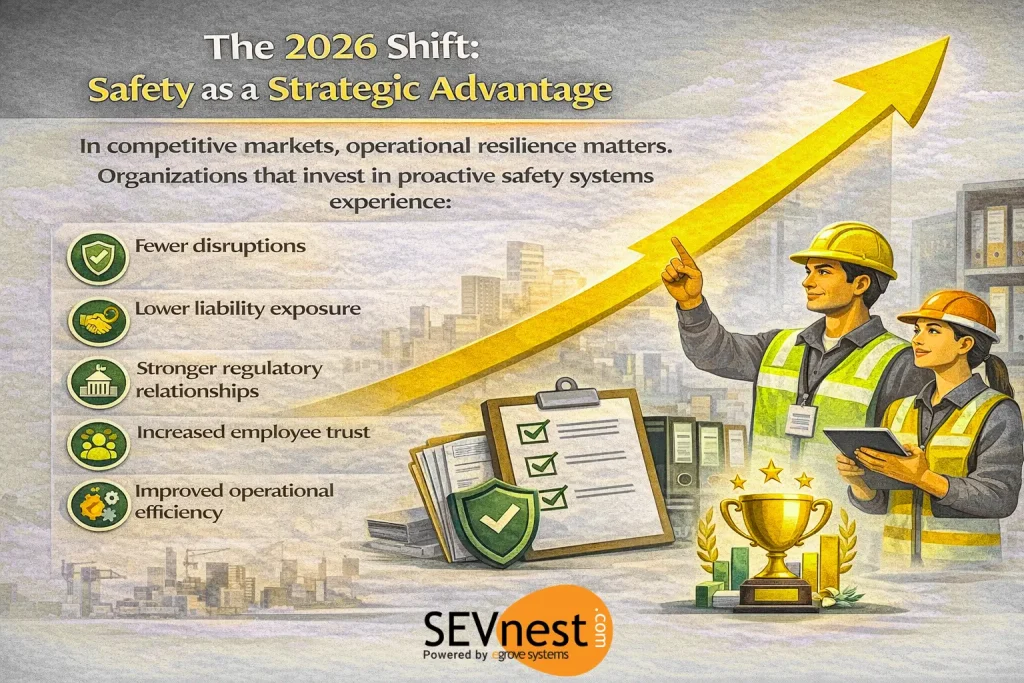
In competitive markets, operational resilience matters. Organizations that invest in proactive safety systems experience:
- Fewer disruptions
- Lower liability exposure
- Stronger regulatory relationships
- Increased employee trust
- Improved operational efficiency
Workplace safety training in 2026 is no longer just about avoiding penalties. It is about strengthening the operational foundation of the organization.
By moving beyond compliance toward structured prevention, businesses transform safety training into a long-term competitive advantage.
Strengthening Workplace Safety for the Future
Workplace safety training must evolve because workplace risk has evolved. Compliance remains necessary, but it cannot be the ceiling.
Organizations that treat safety training as a strategic pillar rather than a regulatory obligation position themselves for sustainable growth, stronger workforce engagement, and reduced operational vulnerability.
SEVnest supports businesses in building structured workplace safety training frameworks that go beyond compliance, reinforce risk prevention, and strengthen long-term operational stability.