

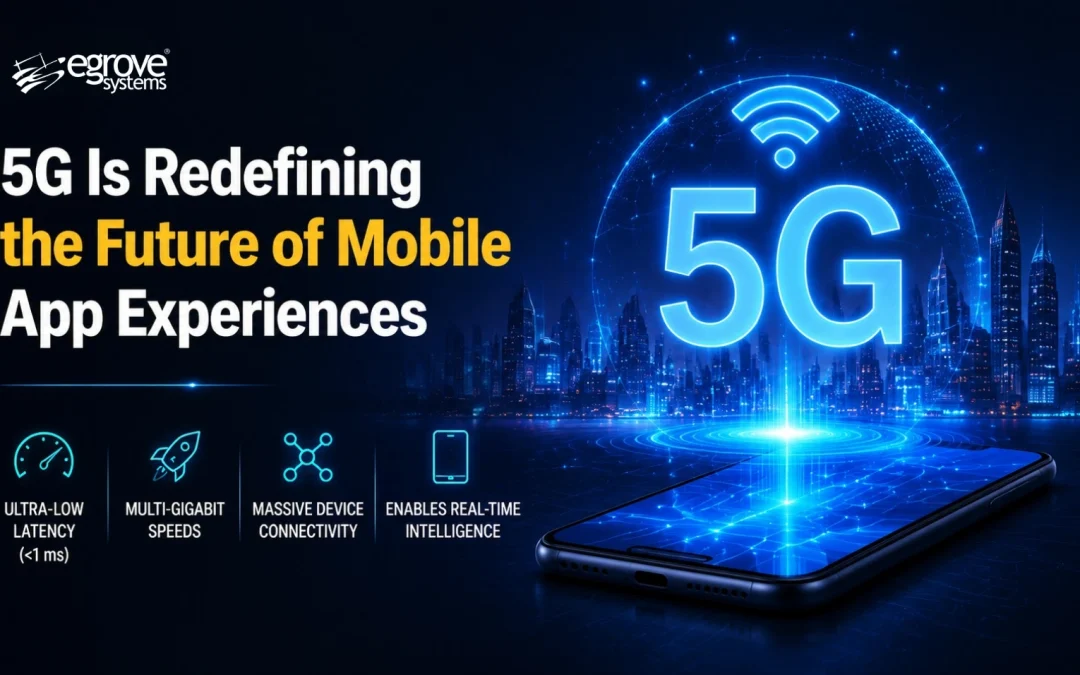
The rollout of 5G technology is not just an incremental upgrade from 4G,it represents a structural shift in how mobile applications are designed, developed, and experienced. With ultra-low latency, higher bandwidth, and massive device connectivity, 5G is reshaping user expectations and unlocking entirely new categories of mobile apps.
For developers, businesses, and product teams, this shift is less about “faster internet” and more about rethinking what mobile applications can do in real time.
Understanding 5G: Beyond Faster Speed
5G (fifth generation mobile network) offers three core improvements over previous generations:
- Ultra low latency (as low as 1 ms)
- Massive bandwidth (multi-gigabit speeds)
- High device density (IoT scalability)
While 4G enables streaming and social media at scale, 5G enables real-time intelligence, immersive experiences, and cloud-native mobile computing.
This foundational shift is directly influencing mobile app development strategies across industries.
1. Real-Time Applications Become the New Standard
One of the most significant impacts of 5G is the rise of real-time applications.
What changes with 5G?
Apps no longer need to rely heavily on buffering, preloading, or delayed syncing.
Examples:
- Real-time multiplayer gaming with zero lag
- Live collaboration tools (like shared AR workspaces)
- Instant translation apps for global communication
- Real-time financial trading dashboards
Developer shift:
Developers now prioritize:
- WebSockets over REST polling
- Edge computing integration
- Event-driven architectures
Real-time responsiveness is no longer a premium feature; it becomes a baseline expectation.
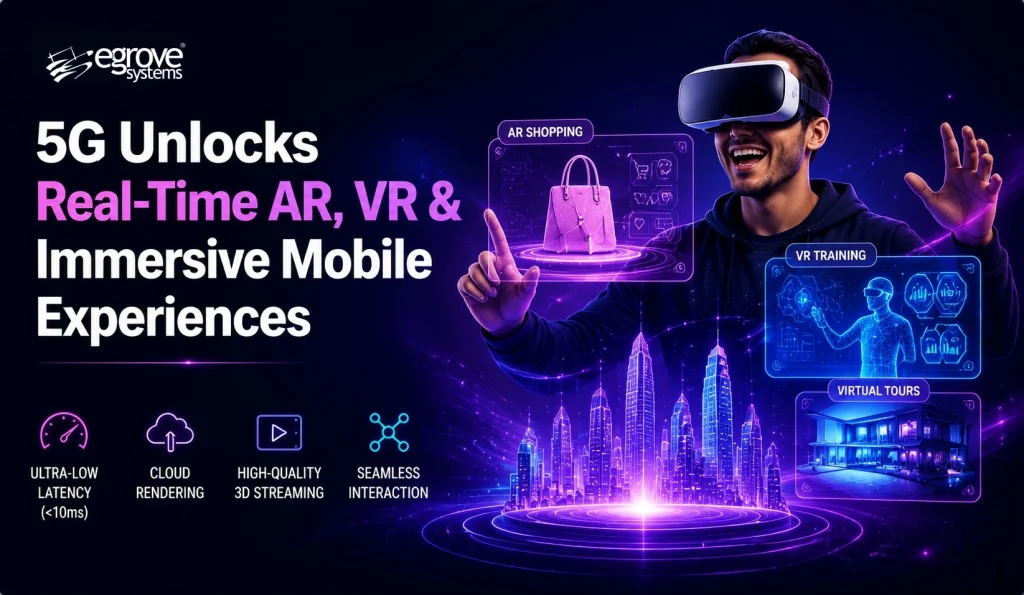
2. Rise of AR, VR, and Extended Reality (XR) Apps
5G is a major enabler of immersive technologies.
Previously, AR/VR apps were limited by the following:
- High latency
- Heavy device processing load
- Poor streaming quality
With 5G:
- Rendering can be offloaded to the cloud
- High-quality 3D assets stream instantly
- Interaction feels seamless and real-time
Key use cases:
- AR-based shopping apps (try before you buy)
- Virtual property tours in real estate
- VR training simulations in healthcare and manufacturing
- Immersive education platforms
Development impact:
- Increased use of Unity and Unreal Engine
- Cloud rendering pipelines
- 3D asset optimization becomes critical
3. Cloud-Native Mobile Apps Replace Device-Heavy Apps
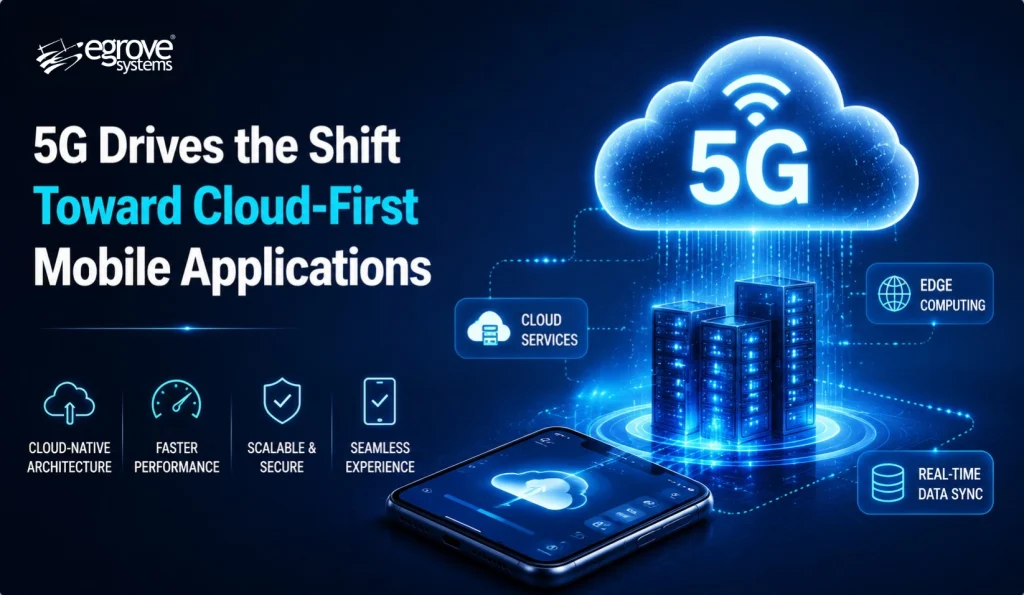
5G strengthens the shift toward cloud-first mobile architecture.
Instead of relying on device processing power, apps increasingly depend on:
- Cloud computing
- Edge servers
- Microservices architecture
Benefits:
- Smaller app sizes
- Faster load times
- Device-agnostic performance
Example:
A photo editing app no longer processes images on the device. Instead, it sends tasks to cloud GPUs and returns results instantly.
Developer shift:
- The backend becomes more critical than frontend in performance design
- API optimization is essential
- Increased use of serverless architecture
4. IoT-Driven Mobile Applications Expand Rapidly
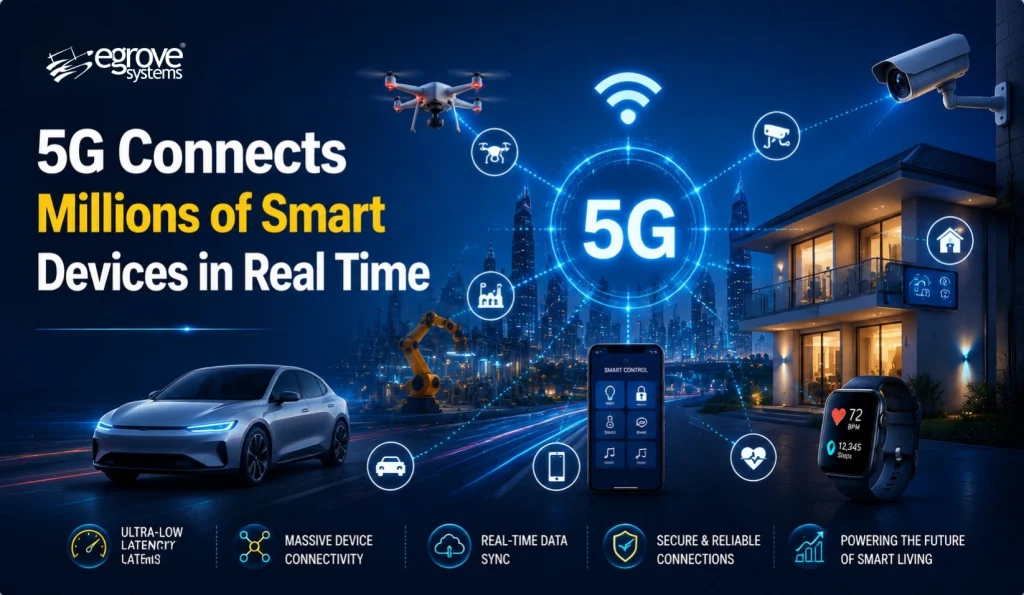
5G enables up to 1 million devices per square kilometer, making IoT ecosystems highly scalable.
Mobile apps now act as control hubs for:
- Smart homes
- Connected vehicles
- Wearable health monitors
- Industrial sensors
Example use cases:
- Smart city dashboards
- Remote patient monitoring apps
- Fleet management systems
- Connected agriculture platforms
Development impact:
- MQTT and lightweight protocols become standard
- Strong focus on security and encryption
- Real-time sensor data visualization
5. AI-Powered Mobile Apps Become More Responsive
AI and 5G together create powerful synergy.
5G provides speed, while AI provides intelligence.
What changes:
- Faster AI inference via cloud processing
- Real-time personalization
- Instant voice and image recognition
Examples:
- AI chatbots with zero delay responses
- Real-time fraud detection in banking apps
- Personalized shopping recommendations updated instantly
Developer shift:
- Integration with AI APIs becomes real-time
- Continuous learning models are deployed on edge servers
- Data pipelines must be highly optimized
6. Enhanced Video Streaming and Live Experiences
5G dramatically improves mobile video experiences.
Improvements:
- 4K and 8K streaming on mobile
- Buffer-free live broadcasting
- Interactive live commerce (live shopping apps)
Examples:
- TikTok-like platforms with ultra HD streaming
- Live sports apps with multi-angle viewing
- Real-time auction platforms
Development impact:
- Adaptive bitrate streaming becomes standard
- CDN optimization is critical
- Low latency video protocols (WebRTC) gain importance
7. Mobile Gaming Evolves into Cloud Gaming Ecosystems
Gaming is one of the biggest beneficiaries of 5G.
Changes:
- No need for high-end devices
- Games run on cloud servers
- Instant multiplayer synchronization
Examples:
- AAA games on mobile via cloud streaming
- Real-time esports platforms
- AR-based outdoor gaming experiences
Developer shift:
- Game logic shifts to server side
- Reduced dependency on device GPU
- Focus on latency optimization
8. Edge Computing Becomes a Core Architecture Layer
5G networks rely heavily on edge computing.
Instead of sending data to distant cloud servers, processing happens closer to the user.
Benefits:
- Reduced latency
- Faster response times
- Lower bandwidth usage
Use cases:
- Autonomous vehicles
- Smart surveillance systems
- Industrial automation apps
Developer impact:
- Distributed system design becomes mandatory
- Edge cloud hybrid architecture is standard
- Data partitioning strategies evolve
9. Security Becomes More Complex and Critical
With increased connectivity comes increased vulnerability.
Risks:
- More IoT entry points
- Real-time data exposure
- Cloud dependency risks
Security trends in 5G apps:
- Zero trust architecture
- End-to-end encryption
- AI-based threat detection
- Secure API gateways
Developer focus:
Security is no longer a final layer; it is embedded into every stage of app development.
10. Personalized User Experiences at Scale
5G allows apps to collect and process user data in real time, enabling hyper-personalization.
Examples:
- Dynamic UI changes based on user behavior
- Real-time content recommendations
- Location-aware app experiences
Impact:
Apps become more “adaptive” than static interfaces.
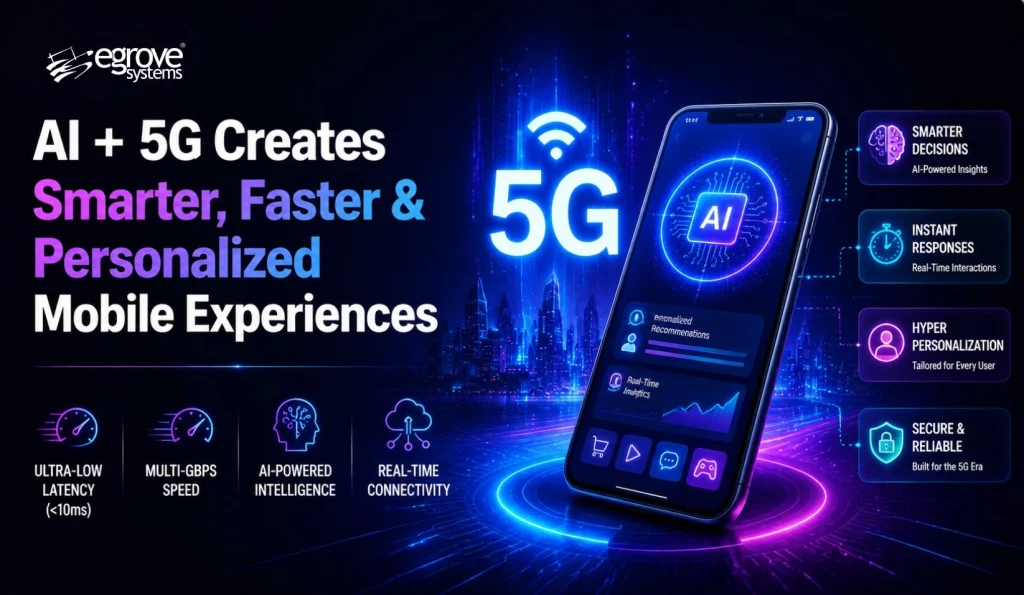
5G MOBILE APP DEVELOPMENT INSIGHTS (2026)
✔ Latency: <10ms real-time response
✔ Speed: Multi-Gbps downloads & streaming
✔ Key Tech: Edge computing + Cloud + AI
✔ Top Use Cases: AR/VR, IoT, Gaming, FinTech, HealthTech
✔ Architecture Shift: Cloud-native + distributed systems
✔ UX Trend: Hyper-personalized, instant interactions
✔ Business Impact: Faster time-to-market, richer apps
✔ Future Direction: 6G + AI-native networks
Future Outlook: Where Mobile App Development is Headed
As 5G becomes globally standardized, mobile applications will evolve into the following:
- Always connected systems
- Cloud-first experiences
- AI native platforms
- Immersive digital environments
The traditional idea of “downloading an app” is slowly being replaced by “accessing a real-time digital service.”
Developers who adapt to 5G-first architecture will lead the next wave of mobile innovation.
How eGrove Systems Aligns with 5G-Driven Innovation
At eGrove Systems, mobile app development is evolving to match the 5G era through:
- Cloud-native mobile architectures
- AI-integrated application development
- Scalable backend systems for real-time apps
- IoT-enabled mobile platforms
- Performance-focused engineering for low-latency apps
This approach ensures businesses can build future-ready mobile solutions that fully utilize 5G capabilities.
Conclusion
5G is not just improving mobile speed; it is fundamentally redefining mobile app development. The entire mobile ecosystem is shifting toward instant, intelligent, and interconnected experiences, driven by real-time processing, cloud-native architecture, immersive AR/VR, and AI-powered personalization.
For businesses and developers, the message is clear:
“The future of mobile apps is not just fast; it is real-time, intelligent, and boundaryless.”