
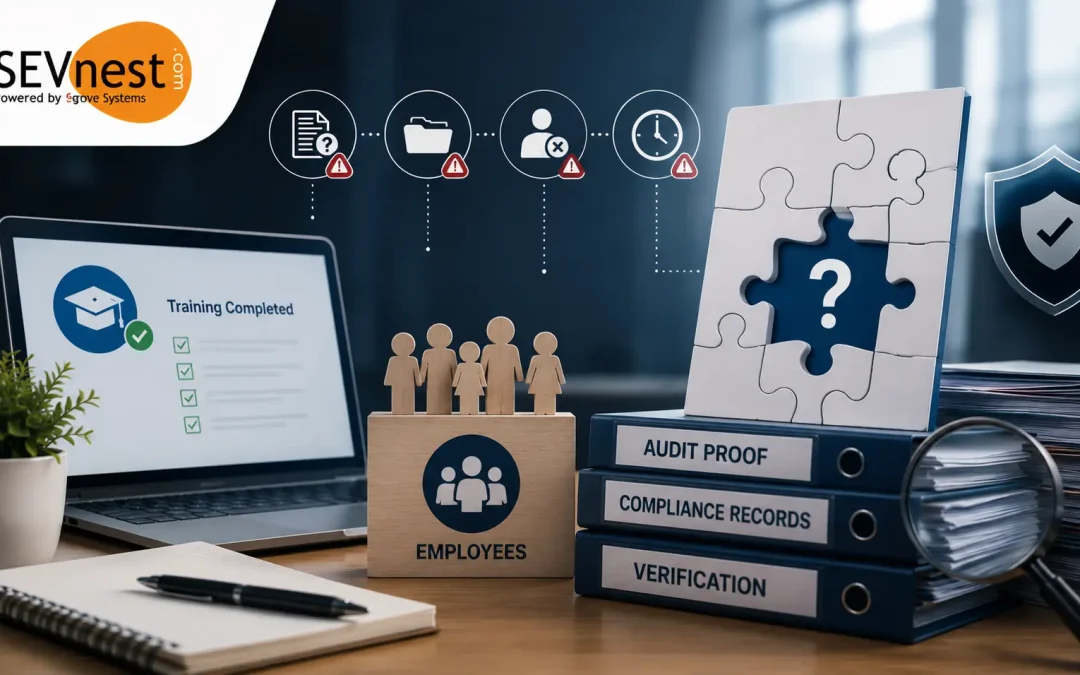
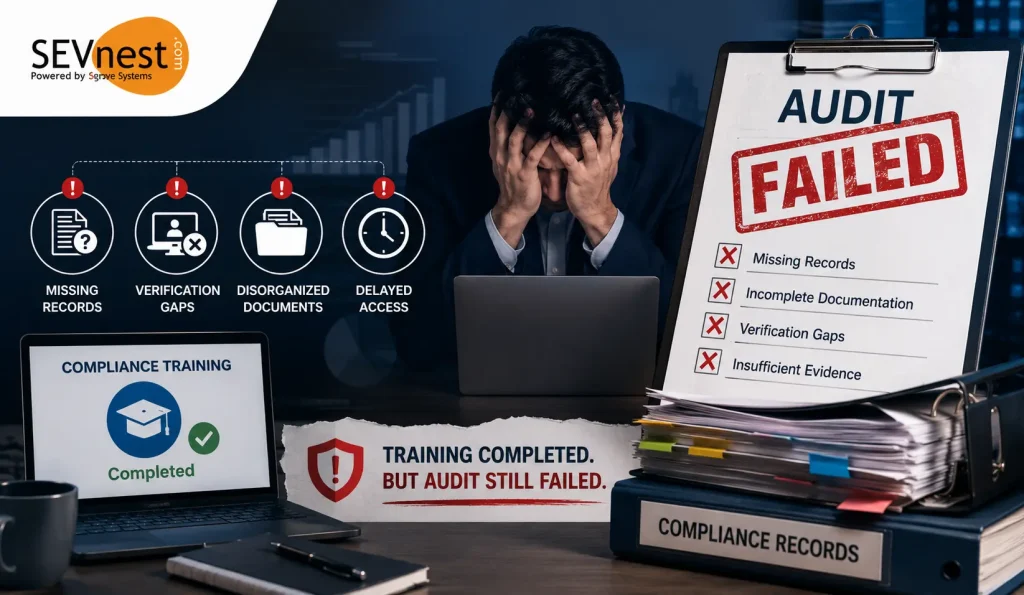
Many organizations believe that once employees complete compliance training, audits fully protect them. Training records may show completion, certificates may be generated, and managers may assume that they have met compliance requirements. However, audits often reveal a different reality.
In many cases, organizations fail audits not because training was ignored, but because compliance could not be properly verified, tracked, or proven. Missing records, inconsistent documentation, and manual tracking gaps can quickly turn completed training into a compliance risk.
Today, compliance is not only about delivering training. It is about maintaining accurate, verifiable, and audit-ready proof.
Why Training Alone Is Not Enough
Compliance training is an important step, but training completion alone does not guarantee audit readiness.
Auditors typically look beyond course completion and ask questions such as the following:
- Can the organization verify employee participation?
- Are records centralized and accessible?
- Is training history properly documented?
- Can compliance proof be produced immediately?
- Are there controls to monitor ongoing compliance?
If organizations cannot answer these questions confidently, audit exposure increases.
A completed training course without supporting proof may not be enough during compliance reviews.
Common Audit Proof Failures
Many compliance failures happen because organizations cannot produce reliable evidence when audits begin.
Some of the most common audit-proof issues include the following:
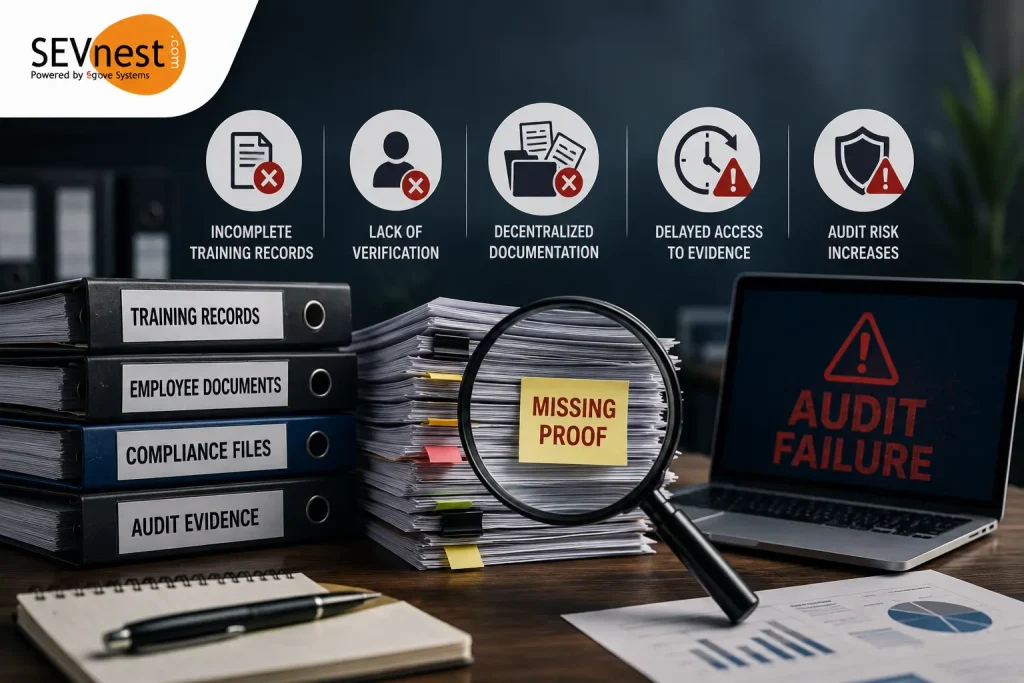
Incomplete Training Records
Organizations may have missing certificates, outdated employee records, or inconsistent tracking data across departments.
Lack of Verification
Training may appear completed, but there may be no confirmation that employees actively participated or understood the material.
Decentralized Documentation
Compliance records stored across spreadsheets, emails, folders, or multiple systems create confusion and reduce visibility.
Delayed Access to Evidence
During audits, organizations often struggle to retrieve accurate compliance documentation quickly.
Even small documentation gaps can raise serious concerns during regulatory reviews.
Missing Records and Verification Gaps
One of the biggest compliance risks is the inability to prove training activity with confidence.
For example:
- An employee completes training, but the records are not updated correctly.
- Training certificates are stored manually and later become inaccessible.
- Audit logs are incomplete or inconsistent.
- Managers cannot confirm who completed the mandatory requirements.
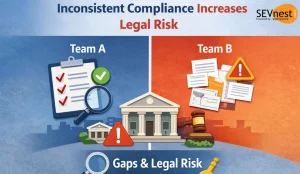
These gaps create uncertainty around compliance integrity. Inconsistent compliance practices can increase legal risk across the organization. Learn how inconsistency leads to higher legal exposure and audit challenges.
When proof is missing, auditors may question whether anyone is managing compliance processes effectively at all.
Compliance Integrity Challenges
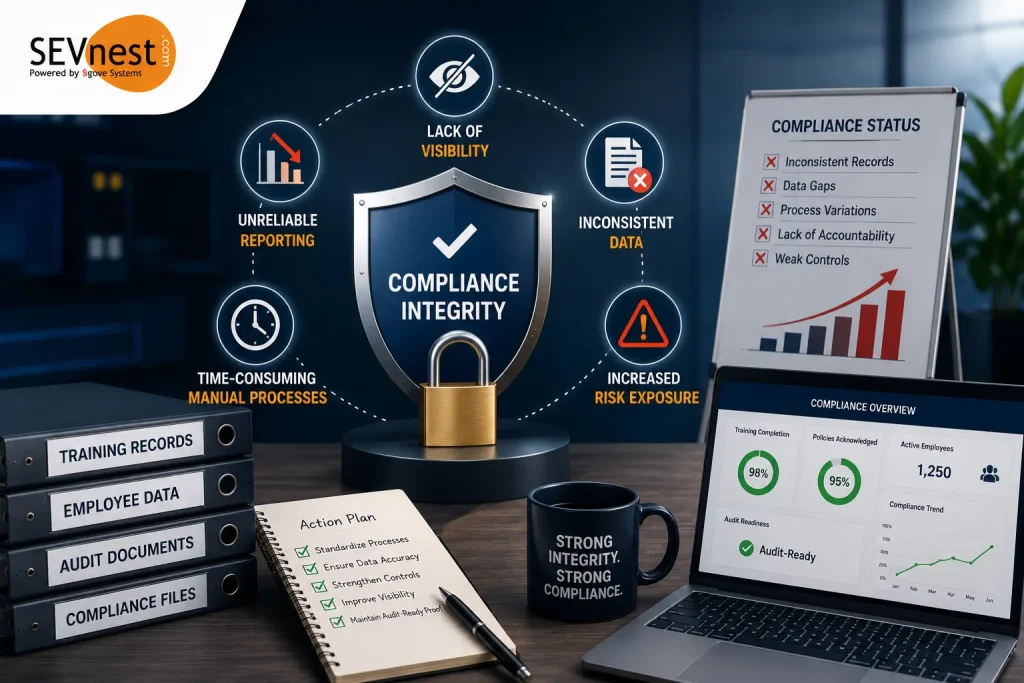
Compliance integrity means ensuring that compliance activities are accurate, consistent, traceable, and verifiable.
Without strong compliance integrity:
- Organizations lose visibility into employee status
- Reporting becomes unreliable
- Audit preparation becomes stressful
- Compliance teams spend excessive time gathering proof manually
- Risk exposure increases across departments
As organizations grow, maintaining compliance integrity becomes even more difficult without centralized systems and automation.
Why Manual Tracking Fails
Many organizations still rely heavily on spreadsheets, emails, shared folders, and disconnected systems to manage compliance training.
While these methods may work temporarily, they often fail at scale.
Manual tracking creates challenges such as the following:
- Human error
- Duplicate records
- Missed updates
- Inconsistent reporting
- Poor visibility across teams
- Difficulty retrieving audit evidence
Compliance management becomes increasingly complex when organizations spread records across multiple locations.
Without centralized oversight, organizations may not discover gaps until an audit exposes them.
The Importance of Audit-Ready Proof
Modern compliance requires organizations to maintain clear, organized, and verifiable documentation at all times.
Audit-ready proof helps organizations:
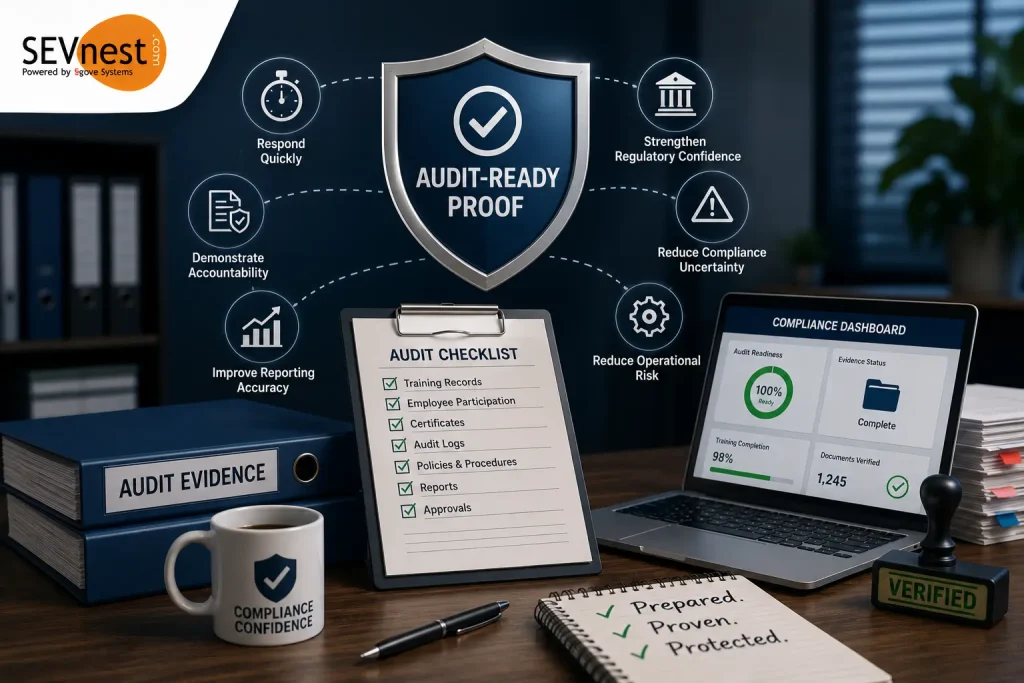
- Respond quickly during audits
- Demonstrate accountability
- Reduce compliance uncertainty
- Improve reporting accuracy
- Strengthen regulatory confidence
- Reduce operational risk
Organizations that maintain continuous compliance visibility are better prepared to handle audits, inspections, and regulatory reviews without disruption.
How SEVnest Strengthens Compliance Verification
SEVnest helps organizations move beyond basic training completion by improving compliance visibility, verification, and audit readiness.
With SEVnest, organizations can:
✔ Track training completion centrally
✔ Verify employee participation
✔ Maintain audit-ready compliance records
✔ Improve visibility across teams and departments
✔ Reduce manual tracking gaps
✔ Strengthen compliance documentation and reporting
By centralizing compliance management and improving verification processes, SEVnest helps organizations reduce audit risk and maintain stronger compliance integrity.
Compliance Requires More Than Training Completion
Completing compliance training is important, but it is only one part of audit readiness.
Organizations also need reliable tracking, verification, centralized records, and defensible proof. Without these elements, even completed training programs can create compliance exposure during audits.
The real challenge is not simply delivering training.
It is proving compliance with confidence.
SEVnest helps organizations strengthen compliance verification, improve audit readiness, and maintain the visibility needed to manage compliance effectively.