
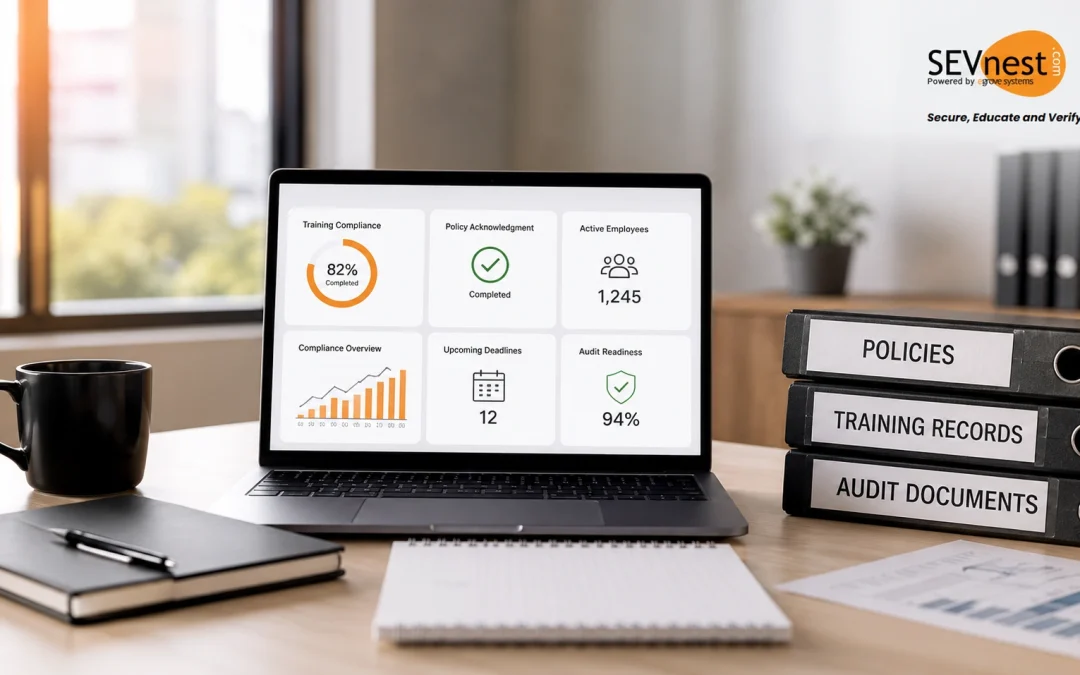
Manual compliance processes may work when organizations are small. Teams often manage employee training records, policy updates, and compliance tracking through spreadsheets, emails, and shared folders. However, as organizations expand, these methods become increasingly harder to control.
More employees, multiple departments, growing operations, and increasing regulatory responsibilities create a level of complexity that manual systems cannot manage efficiently. What once seemed manageable can quickly become a serious compliance risk.
The problem is not only the growing workload. Manual compliance management depends heavily on people remembering tasks, updating records correctly, and maintaining consistency across teams. As organizations scale, this creates gaps that are often discovered only during audits or compliance failures.
SEVnest helps organizations replace fragmented manual processes with centralized and automated compliance management that improves operational clarity, consistency, and audit readiness.
Human Dependency Creates Compliance Weakness
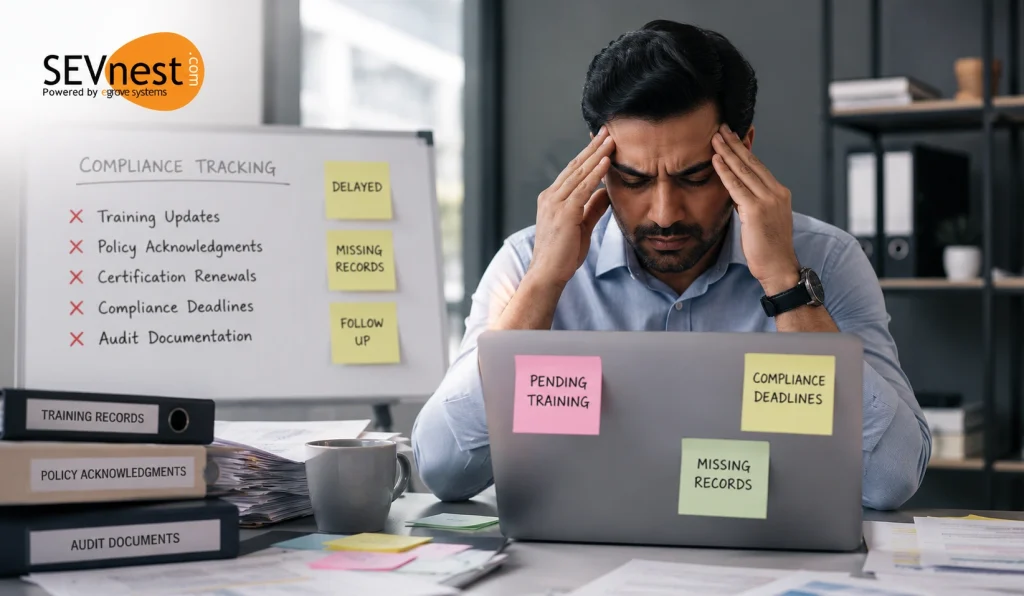
One of the biggest challenges in manual compliance management is heavy dependence on individuals.
Managers may use different tracking methods, employees may forget to provide updates, and they may store records in multiple locations. Over time, these issues create inconsistency across the organization.
Common problems include:
- Delayed training updates
- Missed compliance deadlines
- Incomplete records
- Inconsistent reporting
- Poor coordination between departments
As operations grow, these gaps become harder to manage manually. Compliance gradually depends more on memory and follow-ups than on structured systems. That is where compliance risk begins to increase.
Tracking Limitations Increase as Organizations Expand
As compliance requirements increase, manual tracking becomes more difficult and time-consuming.
Organizations must continuously monitor:
- Employee training completion
- Policy acknowledgments
- Certification renewals
- Compliance deadlines
- Audit documentation
When this information spreads across spreadsheets and disconnected tools, it limits operational oversight. Duplicate records, delayed updates, and incomplete tracking often become common operational problems.
Without centralized oversight, organizations may not recognize compliance gaps until auditors request proof. By then, the pressure is already high.
Lack of Visibility Weakens Compliance Control
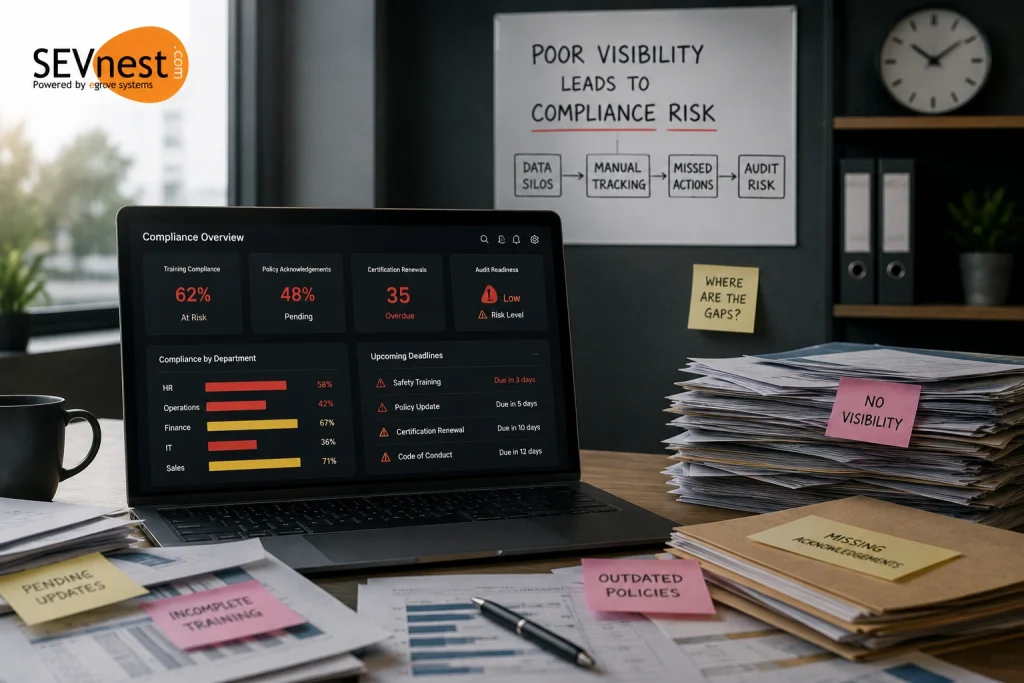
Limited visibility is another major weakness of manual compliance systems.
Leadership teams often struggle to identify:
- Employees with pending compliance requirements
- Departments with compliance gaps
- Missing or outdated records
- Incomplete policy acknowledgments
- Inconsistent processes across locations
Without real-time compliance insight, organizations often react only after problems appear.
A small compliance issue in one department can eventually affect the entire organization if it remains unnoticed. As operations grow, stronger monitoring and operational clarity become essential for maintaining compliance control and reducing risk.
Multi-Location Operations Create Inconsistency
Compliance management becomes even more difficult when organizations operate across multiple locations or departments.
Different teams may follow different processes, maintain records differently, or track compliance activities inconsistently. This creates confusion and weakens standardization across the organization.
Common challenges include:
- Uneven policy communication
- Inconsistent documentation practices
- Different reporting methods
- Compliance gaps between locations
Auditors expect organizations to maintain consistency across all operations. When compliance processes vary between teams or branches, it raises concerns about reliability and governance.
Audit Challenges Grow with Manual Processes
Manual systems often become a major weakness during audits.
Auditors expect organizations to provide accurate and accessible records quickly. However, when compliance records are stored across emails, folders, and spreadsheets, retrieving information becomes stressful and time-consuming.
Organizations commonly face:
- Missing training records
- Delayed document access
- Incomplete reports
- Unverified participation records
- Difficulty proving compliance history
Even completed compliance activities can become a risk if organizations cannot provide reliable proof.
The challenge is not only completing compliance tasks. It is proving them confidently during audits and regulatory reviews.
Why Automation Has Become Essential
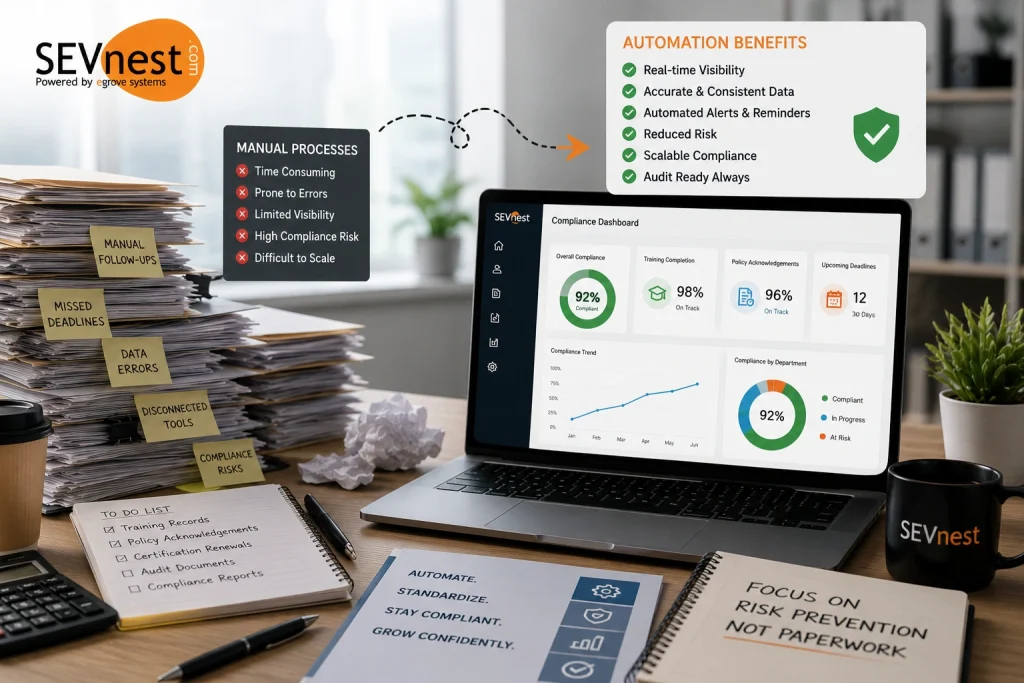
As compliance demands continue to grow, automation becomes essential for maintaining control and reducing operational risk.
Automated compliance management helps organizations:
- Reduce manual follow-ups
- Centralize compliance records
- Monitor compliance activities in real time.
- Receive alerts for missing actions
- Improve reporting accuracy
- Maintain continuous audit readiness
Instead of relying on spreadsheets and disconnected tracking methods, organizations can build structured compliance processes that scale with business growth.
Automation also reduces administrative pressure and allows compliance teams to focus more on risk prevention instead of repetitive manual tasks.
Most importantly, automation helps organizations identify compliance gaps before they become larger operational or legal risks.
How SEVnest Helps Organizations Scale Compliance with Confidence
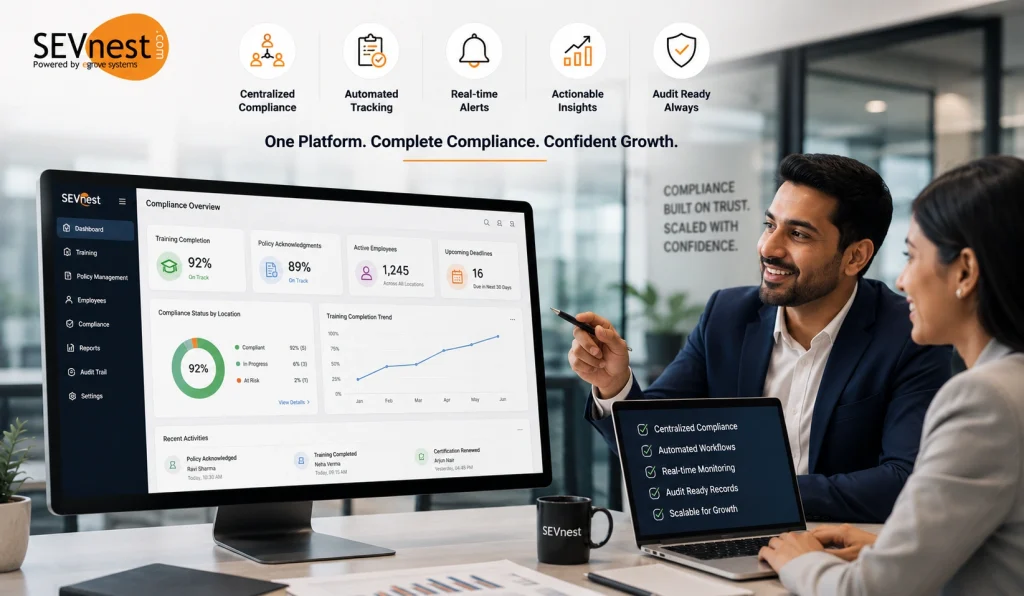
Many compliance tools only provide basic tracking features.
SEVnest is designed to help organizations maintain control as compliance requirements become more complex.
With SEVnest, organizations can:
- Centralize compliance management across teams and locations
- Automate employee training and policy tracking
- Maintain structured audit-ready records
- Monitor compliance activities in real time
- Improve visibility across departments
- Reduce dependency on manual follow-ups
- Strengthen consistency across operations
Unlike disconnected systems that rely heavily on manual effort, SEVnest provides scalable compliance management built for long-term operational control.
SEVnest helps organizations stay organized, reduce compliance gaps, and maintain audit-ready confidence as they grow.
Final Thoughts
Manual compliance processes may work temporarily, but they become harder to manage as organizations scale.
Human dependency, tracking limitations, inconsistent processes, and poor visibility create compliance risks that continue to grow over time. These issues often go unnoticed until an audit or compliance review brings them to attention. Automation changes that.
It improves operational clarity, strengthens consistency, reduces manual effort, and helps organizations maintain stronger compliance control at scale.
SEVnest helps organizations move beyond fragmented compliance management by providing the structure, automation, and visibility needed to stay ahead of compliance risk.